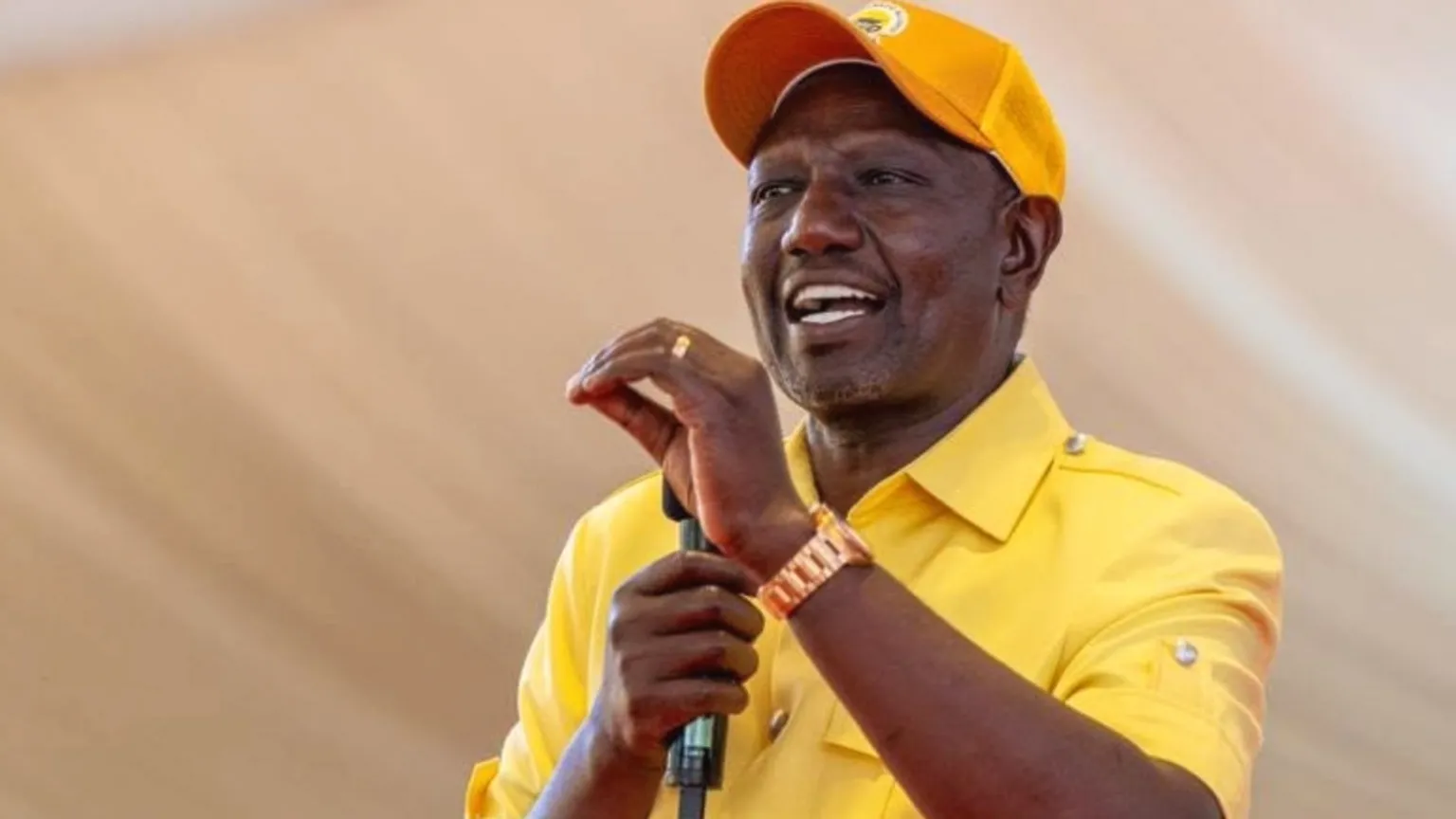
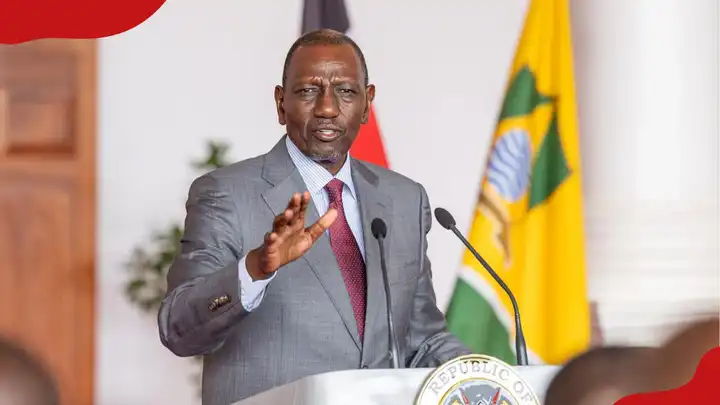
President William Ruto has ordered a nationwide crackdown on foreigners operating small-scale businesses in Kenya, giving foreign traders until September 7 to shut down their operations—a move critics describe as a breathtaking act of hypocrisy given his previous advocacy for a borderless Africa.
Ruto directed the Ministry of Investments, Trade and Industry to begin enforcement action next week against foreigners engaged in businesses reserved for Kenyans. The directive targets foreign small-scale traders across Kenya, particularly in major cities, and comes amid growing debate about the increasing number of African migrants involved in Kenya's vast informal economy.
The Directive
Speaking to Micro, Small and Medium Enterprises traders at State House, Nairobi, Ruto said a Bill was already before Parliament seeking to prohibit foreigners from engaging in certain businesses. He directed Industry Principal Secretary Juma Mukhwana to engage traders and other stakeholders to fine-tune the Bill before it is passed.
Ad
"All those traders and hawkers doing these small businesses should close down and if they don't do that..." Ruto said. "From next week when Lee returns from Addis, Monday begin that crackdown."
The President insisted that Kenya remains open to foreign investment but argued that investors—including Chinese traders—should create jobs and expand production rather than compete with Kenyans in small businesses. "It cannot be that a person comes from China or elsewhere to be a hawker or open a small shop," he said.
The Hypocrisy Accusation
Critics argue that the directive stands in stark contrast to Ruto's longstanding advocacy for free movement across Africa. Earlier this year, Ruto stood before African leaders and declared that "when people cannot travel, business people cannot travel and entrepreneurs cannot travel, we all become net losers." He has also removed visa requirements for all Africans, celebrating the vision of a borderless continent.
Now, the same president is drawing lines in the sand around neighbourhood kiosks. The contradiction is particularly striking given that Ruto's government runs Kazi Majuu, a state program that recruits Kenyans for jobs abroad—reportedly placing more than 500,000 Kenyans in overseas jobs since 2023.
The Africana Voice described the move as "an act of brazen hypocrisy" from a president who built a foreign policy on exporting Kenyan labour but now wants to restrict foreign labour at home.
Regional Retaliation Fears
Kenyan entrepreneurs have built livelihoods across East Africa. They are the barbers in Bujumbura, the tailors in Kigali, the traders in Lusaka and the hawkers in Harare. Critics warn that any backlash against foreign traders in Kenya could be swift and damaging to Kenya's reputation as a regional economic hub.
"If Kenya begins behaving like South Africa, driving out small-scale traders from Rwanda, Burundi, Uganda, Somalia, DR Congo, South Sudan and Tanzania, the backlash will be swift and merciless," a Daily Nation analysis warned. Retaliation, it noted, "requires only the decision of a Ugandan official to look the other way when a Kenyan trader's permit expires."
Kenya is preparing to tighten restrictions on foreign nationals operating small businesses, after President William Ruto ordered a crackdown on foreign hawkers and small-scale retailers, arguing that such businesses should be reserved for Kenyan citizens.
Impact on Refugees
The crackdown is likely to disproportionately affect refugees. Government figures show that Kenya had about 857,000 registered refugees and asylum seekers by the end of June, with nearly 14% living in urban areas. Kenyan law recognises the right of refugees to work and operate businesses, although they are required to obtain appropriate documentation.
Critics argue that a Rwandan refugee who fled conflict and now sells clothes on the streets of Nairobi is "contributing to the economy, paying rent, buying stock and feeding his or her family." To dismiss their labour as illegitimate "is to misunderstand the very nature of African commerce."
Populism or Policy?
Ruto, who plans to seek a second term in next year's election, appears to be acting with a populist impulse, promising to speed up legislation barring foreigners from certain businesses. However, his critics argue that the crackdown is a distraction from his own failure to create jobs for Kenyan youth.
Kenya produces more than 60,000 university graduates a year, yet youth unemployment remains a crisis. "Foreign traders selling vegetables or running kiosks are not the reason those graduates cannot find work," the Africana Voice noted. "They are an easy target."
The directive also appears to conflict with free movement provisions within the East African Community, which guarantees the free movement of persons, services and the right of establishment for citizens of partner states. Last year, Kenya formally protested Tanzania's similar restrictions on foreign traders, calling the move inconsistent with the EAC Common Market Protocol.
A Contradiction Too Big to Ignore
The same President Ruto who champions open borders, who has taken leadership roles in the Common Market for Eastern and Southern Africa to campaign for a fully visa-free Africa, is now telling a Burundian hawker to pack up and leave. His attempted distinction between "investment" and "hawking" has been described as intellectually dishonest.
"What changed?" the Daily Nation asked. "Was the vision genuine but fragile, easily discarded when political convenience beckoned?"
With reporting from The Star, Daily Nation, BBC, Business Insider Africa, Leadership Newspapers and The Africana Voice.
If Kenya can send its citizens to work across Africa through Kazi Majuu, why shouldn't African migrants be allowed to work in Kenya? Doesn't a borderless Africa mean opportunities for everyone, or only for those with political power?
This is the moment for African leaders to be consistent. You cannot champion the free movement of labour and capital and then restrict it when it becomes politically convenient.
Please complete the verification below to continue.
Please complete the verification
Human verification passed
Edit Comment
Delete Comment
Are you sure you want to delete this comment?
This action cannot be undone.
Loading comment content...
We value your privacy
We use cookies to enhance your browsing experience, serve personalized content, and analyze our traffic. By clicking "Accept All", you consent to our use of cookies. You can manage your preferences at any time. Learn more.
Cookie Settings
We use cookies to improve your experience on our site. You can choose which cookies to allow. Read our full Cookie Policy.
Essential CookiesRequired
These cookies are necessary for the website to function properly and cannot be switched off.
Analytics & Performance
These cookies help us understand how visitors interact with our website by collecting anonymous information.
Functional Cookies
These cookies enable enhanced functionality and personalization, such as remembering your preferences.
Targeting & Advertising
These cookies may be used by advertising partners to build a profile of your interests and show you relevant ads.
















This is the moment for African leaders to be consistent. You cannot champion the free movement of labour and capital and then restrict it when it becomes politically convenient.
It's interesting how dynamic politics is.