The African Union has issued an urgent call for restraint and immediate de-escalation in northern Ethiopia after Tigray forces seized three strategic airports, detained federal personnel and launched attacks into neighbouring regions, threatening to unravel the Pretoria peace agreement that ended one of the continent's deadliest civil wars.
In a statement issued late Wednesday, AU Commission Chairperson Mahmoud Ali Youssouf expressed "deep concern" over renewed tensions and military escalation in northern Ethiopia, highlighting the seizure and occupation of the airports of Mekelle, Axum and Shire by the Tigray People's Liberation Front. The chairperson also voiced "grave concern" over reports of escalating hostilities in parts of South Tigray and the Afar Region, as well as the formation of new political and military alliances that risk further destabilising the situation.
What Sparked the Crisis
The latest escalation follows months of rising tensions between Prime Minister Abiy Ahmed's federal government and Tigray authorities. On Sunday, the TPLF announced an alliance with six other armed groups—including the Amhara Fano militia and the Oromo Liberation Army—aimed at overthrowing Abiy's government.
Ad
On Wednesday, Tigray forces seized control of the airports in Mekelle, Axum and Shire from federal police, prompting Ethiopian Airlines to suspend all flights to the region. The TPLF-led regional administration said its forces had been ordered to enter a "defensive war" in response to what it described as "intensive bombardments" by federal forces involving "aircraft, drones and artillery."
The federal government has yet to comment directly on the clashes, but Getachew Reda, a minister adviser to the Prime Minister on East African Affairs and a former TPLF official, accused the TPLF of launching "an all-out offensive" against government positions in Afar and Amhara regions.
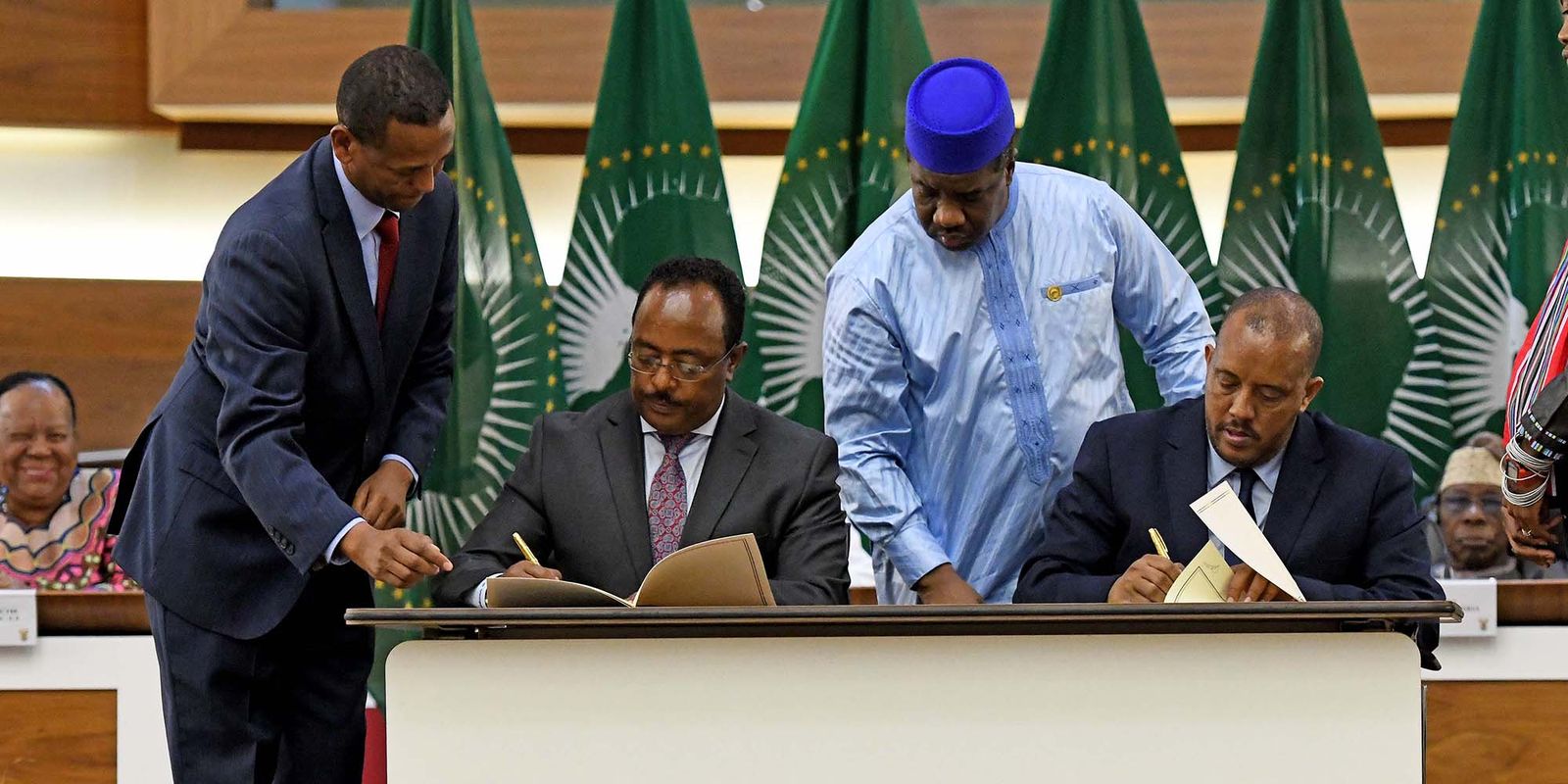
Redwan Hussien Rameto (second from left), representative of the Ethiopian government, and Getachew Reda (far right) of the Tigray People's Liberation Front sign a peace agreement in Pretoria on 2 November 2022. (Photo: Jacoline Schoonees / Dirco)
The AU's Response
The AU Commission Chairperson reaffirmed that the Agreement for Lasting Peace through a Permanent Cessation of Hostilities, signed in Pretoria on 2 November 2022, remains "the cornerstone of sustainable peace, stability and reconciliation in Ethiopia."
Youssouf said the seizure and occupation of the civilian airports was inconsistent with the commitments and obligations under the Pretoria Agreement and risked eroding the hard-won gains achieved in the pursuit of lasting peace.
"The AUC Chairperson calls for utmost restraint and the immediate cessation of all actions that could further escalate tensions," the AU statement read.
He called for the immediate resumption of direct talks within the framework of the Pretoria Agreement and urged all neighbouring countries of Ethiopia to refrain from actions that could contribute to further escalation and to actively support de-escalation, dialogue and confidence-building.
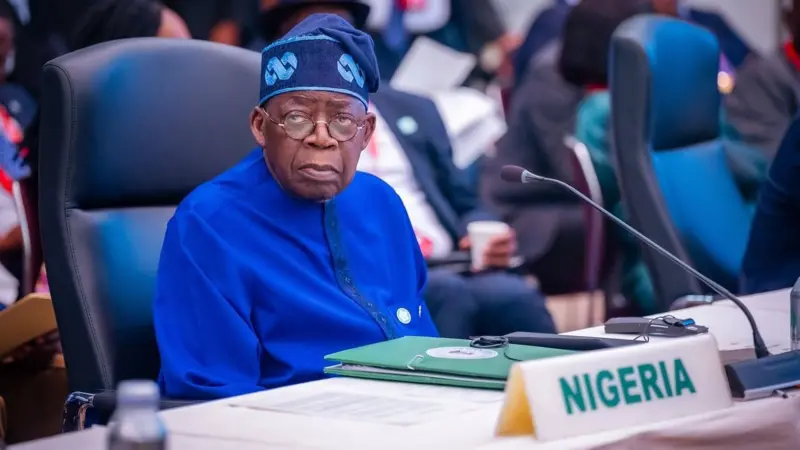
To support renewed diplomatic efforts, Youssouf has asked former Nigerian President Olusegun Obasanjo, the AU High Representative for the Horn of Africa, to urgently engage the parties and support diplomatic efforts aimed at reducing tensions, promoting dialogue and safeguarding the peace process.
Tigray Accuses AU of Failing to Enforce Peace Deal
The Tigray Communication Affairs Bureau responded to the AU statement on Thursday by accusing the continental body of failing to ensure the implementation of the Pretoria Agreement. The bureau said the regional government had repeatedly appealed to the AU to use its influence to secure implementation and to reconvene the AU High-Level Panel to assess implementation and provide a way forward.
The bureau said those appeals had gone unanswered and argued that the agreement had been left "largely at the mercy of the Federal Government." It accused the federal government of failing to uphold mutual recognition between the signatories and restore the legal and political status of the TPLF, and said core provisions of the agreement remained unimplemented.
The Tigray authorities further attributed worsening conditions in the region to what they described as an "economic embargo," denial of budget transfers and restrictions on essential services. On the security situation, the bureau alleged that federal forces had undertaken large-scale military mobilisation along Tigray's borders and launched an offensive in Shererina in Western Tigray, and that drone surveillance, strikes and air bombardments had caused civilian casualties and property damage. These allegations have not been independently verified.
Military Claims and Counter-Claims
The Ethiopian National Defence Force said on Thursday that its forces had repelled attacks from Tigrayan forces and their allies, claiming to have killed 272 TPLF fighters and wounded 260 others in the North Wollo Zone of Amhara region. The army said hostilities began in an area of Amhara close to the border with Tigray, adding that its soldiers had inflicted heavy casualties and seized weapons.
The TPLF has not commented on the army's claims, and the BBC has not been able to independently verify them. The BBC is unable to report from Tigray and surrounding areas.
There are unconfirmed reports that TPLF forces have launched attacks in the neighbouring regions of Afar and Amhara. A humanitarian source in Afar told AFP that Tigrayan forces had launched heavy artillery attacks as they attempted to take control of the town of Yallo, near the border with Tigray. TPLF vice-president Amanuel Assefa said: "We are in the situation of full-blown war now."
International Reactions
The United States ambassador to Ethiopia, Ervin Massinga, described the renewed fighting as an "unwinnable fight" and warned that Washington could impose additional sanctions on leaders involved in the escalation. He expressed disappointment that the TPLF, which the US sanctioned earlier this year, had "made the poor decision to launch a large-scale offensive."
"Rejecting dialogue sponsored by the African Union under former Nigerian President Olusegun Obasanjo and engaging in an 'unwinnable fight' will do nothing for the Ethiopian people," Massinga said, adding that the US had "tools to sanction additional leaders" who try to push Ethiopia "down the wrong path."
The United Nations also expressed concern over the deteriorating situation, with Secretary-General Antonio Guterres urging the parties to de-escalate tensions and return to dialogue under the 2022 Pretoria agreement.
Human Rights Watch warned that the new hostilities raise fears that civilians will face further abuses given the warring parties' past atrocities and ongoing impunity. "The parties need to take all necessary measures to protect civilians and civilian infrastructure," said Laetitia Bader, deputy Africa director at Human Rights Watch.
Panic and Fear in Tigray
Residents of Mekelle described a city gripped by fear and uncertainty. Samuel Gebreslassie, 37, who works in a spice shop in the Tigray capital, told AFP: "A lot of people have been buying food... There is panic in the community, and prices have also risen."
"During the previous war, when banks were shut down, many people suffered terribly... There is deep fear that banks, telecom networks, electricity and basic goods could be cut off again," Gebreslassie said, adding that he lost a younger brother in the last war.
Gebretsadik Abraha, 35, said fuel prices—already high due to restrictions imposed by the federal government—had risen from 400 birr ($2.45) per litre to 650 ($4) with the start of fighting this week. "So many people died in the previous war, and with the fighting restarting, all I foresee is another slaughter. The leaders on both sides must come to the negotiating table," he said.
A Mekelle resident told the BBC that the city was calm except for the stress people were feeling. He said the biggest problem was economic, with people not having enough cash. "People are in a mood where they are distressed because it's been so difficult, so tough. The last seven or eight months the government has been denying budgets to the civil servants and all the banks were running out of cash."
He added that people had been relying on mobile banking, but with the risk of communications being cut off, "people are going to be in grave danger because there is almost no cash." With the outbreak of war, people were limiting their movements and the city was quiet—"it's like a curfew has been placed."
A Fragile Peace at Risk
The 2020-2022 civil war between the TPLF and the federal government killed an estimated 600,000 people and drove the region to the precipice of famine. The Pretoria Agreement halted major fighting but left several issues unresolved, including the status of disputed areas in western Tigray, the return of displaced people, and the disarmament of TPLF forces.
The AU's call for de-escalation represents the most urgent diplomatic intervention yet, but with both sides trading accusations and military operations continuing, the window for dialogue is narrowing. Whether the Pretoria Agreement can survive this latest rupture will determine whether Ethiopia returns to full-scale war or finds a path back to peace.
With reporting from the African Union Commission, BBC, AFP, Reuters, Addis Standard, Anadolu Ajansı and other international media.
Please complete the verification below to continue.
Please complete the verification
Human verification passed
Edit Comment
Delete Comment
Are you sure you want to delete this comment?
This action cannot be undone.
Loading comment content...
We value your privacy
We use cookies to enhance your browsing experience, serve personalized content, and analyze our traffic. By clicking "Accept All", you consent to our use of cookies. You can manage your preferences at any time. Learn more.
Cookie Settings
We use cookies to improve your experience on our site. You can choose which cookies to allow. Read our full Cookie Policy.
Essential CookiesRequired
These cookies are necessary for the website to function properly and cannot be switched off.
Analytics & Performance
These cookies help us understand how visitors interact with our website by collecting anonymous information.
Functional Cookies
These cookies enable enhanced functionality and personalization, such as remembering your preferences.
Targeting & Advertising
These cookies may be used by advertising partners to build a profile of your interests and show you relevant ads.
















Comments (0)
No comments yet. Be the first to share your thoughts!