
The result is a political landscape in which several battles are unfolding simultaneously.
A Disputed History Looms Large
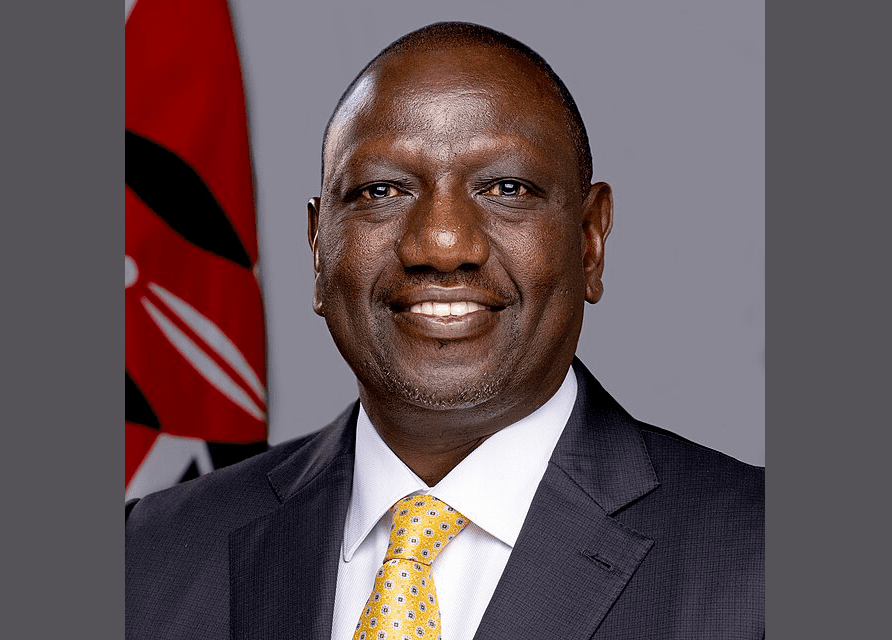
President William Ruto entered State House after a closely contested 2022 presidential election. Raila Odinga challenged the result in the Supreme Court, but the court upheld Ruto's victory. That history matters because Kenya's elections are not judged only by the final tally. Trust in the institutions counting the votes has become almost as important as the votes themselves.

The 2027 contest therefore begins with a political class and electorate already deeply conscious of the disputes that followed previous elections. The credibility of the Independent Electoral and Boundaries Commission (IEBC), election technology, transmission of results and management of polling will again be under intense scrutiny.
IEBC Chairperson Dr. Erastus Edung Ethekon has assured Kenyans of the Commission's commitment to delivering a credible, transparent and peaceful General Election in 2027, while calling for collective responsibility to safeguard the country's democracy. The Commission has already deployed over 12,000 staff across the country to support the ongoing mass voter registration, and Ethekon revealed that the Commission has already registered over one million new voters within days of launching the enhanced voter registration exercise.
The IEBC projects that the Voter Register will grow from 22.1 million in 2022 to approximately 28.5 million by 2027, with polling stations expected to increase from 46,229 to about 55,000. The IEBC is also targeting to add 6.3 million more voters before the 2027 polls, with around 70 percent of them young people.
The Gen Z Earthquake
The defining political event of Ruto's presidency was arguably not an election but the 2024 Finance Bill protests. What began as opposition to proposed tax increases quickly developed into a much broader rejection of government spending, corruption, political privilege and the relationship between citizens and the political establishment.
Young Kenyans, mobilised largely through social media, became the face of the movement. The government eventually withdrew the Finance Bill after Parliament was stormed, while Ruto subsequently dismissed almost his entire Cabinet and promised a more inclusive government. The significance of the protests went beyond the legislation itself. For decades, Kenyan politics had largely been organised around established political personalities, parties and ethnic alliances.
The Gen Z movement demonstrated that large numbers of young Kenyans could mobilise outside those traditional structures. That has created a major uncertainty for 2027. Will these young voters translate their anger into electoral participation, or will distrust of politicians lead some of them to stay away from the ballot? A largely non-partisan Gen Z voter-registration movement is now relying heavily on digital mobilisation rather than traditional party or ethnic networks. An estimated 12 million Kenyans with valid identity cards have never registered to vote.
The Opposition Loses Its Most Important Figure
Kenya's political equation changed again in October 2025 when Raila Odinga died at the age of 80. For decades, Odinga had been one of the country's most powerful opposition figures and had contested the presidency five times. His death removed a political figure who had been capable of mobilising large parts of the opposition and, equally importantly, negotiating directly with governments he had previously opposed.
In March 2025, Ruto's United Democratic Alliance and Odinga's Orange Democratic Movement signed a cooperation framework covering political and socioeconomic issues. Critics saw the arrangement as potentially weakening the traditional opposition, while Ruto and Odinga presented it as an effort to address national problems through cooperation. Odinga's death has now left ODM and the broader opposition without the single figure who for years could anchor a national anti-government coalition. That has made succession and coalition-building central to the 2027 contest.
A Unity Problem for the Opposition
President Ruto's biggest advantage may not necessarily be overwhelming popularity. It may be the difficulty his opponents face in agreeing on one alternative. Several political centres have emerged around figures including former Deputy President Rigathi Gachagua, Kalonzo Musyoka, Fred Matiang'i and Martha Karua, while other politicians and movements are seeking their own space.
The opposition has repeatedly spoken about presenting a single presidential candidate, but agreeing on who should lead such a coalition is considerably harder than agreeing that Ruto should be defeated.
Recent TIFA opinion polls place Ruto ahead of his potential rivals, with 24 percent support, followed by Musyoka at 19 percent, former interior minister Fred Matiang'i at 14 percent, Nairobi Senator Edwin Sifuna at between 10 and 15 percent, and Gachagua at 9 percent. With Kenya's 2022 presidential election decided by just over 200,000 votes, the ability to mobilise new voters and build a unified opposition coalition could prove crucial in determining the outcome of the 2027 race.
Former Deputy President Rigathi Gachagua has offered to shelve his presidential ambitions if doing so would help the United Opposition field a single candidate to challenge President William Ruto. He dismissed rumours that the opposition was facing cracks, terming the claims wishful thinking being peddled by Kenya Kwanza politicians and bloggers who, he said, had already panicked following the recent Ol Kalou by-election defeat.
The Election Date Controversy
The newest complication came from the Judiciary. The High Court has ruled that the next General Election was constitutionally due in August 2026 rather than August 2027, while suspending the effect of the declaration.
Malindi High Court Judge Mugure Thande found that Article 136(2)(a) of the Constitution requires a presidential election to be held on the second Tuesday of August in the fifth year following the previous general election, and not after the fifth year. The judge further found that the fifth year following the August 9, 2022 presidential election commenced on August 9, 2026.
Justice Thande also declared that, by operation of Article 136(2)(a), the President's term of office is not five years. However, the judge suspended the effect of the declaration of invalidity until after the next General Election, allowing the Independent Electoral and Boundaries Commission an opportunity to correct what the court identified as a constitutional defect.
Health Cabinet Secretary Aden Duale has criticised the High Court ruling, arguing that this interpretation would effectively shorten the tenure of elected leaders to four years. Duale said the judgment misinterprets and misapplies the Constitution by drawing an artificial distinction between the phrases "fifth year" and "five years" without considering the wider constitutional framework governing elective offices.
A Perfect Storm of Uncertainty
The 2027 election will bring together several forces that have rarely converged this strongly. There is economic frustration, particularly among young people. There is institutional distrust, intensified by disputes over elections and governance. There is a new opposition landscape following Raila Odinga's death. There is the unresolved question of whether Gen Z's protest movement can become an electoral movement. And there is now a constitutional dispute over the election timetable itself.
At the same time, Ruto has the advantage of incumbency and a governing political machine that has continued preparing for the next election. The IEBC is already registering voters. Parties are positioning candidates. Political alliances are forming and breaking. In other words, although the official campaign period is still ahead, the 2027 election has already begun politically.
The real test will be trust. Kenya's most important 2027 question may ultimately be bigger than whether Ruto wins or loses. It may be whether Kenyans believe the process was fair. A credible election requires more than functioning polling stations. It requires confidence that voters were properly registered, candidates competed fairly, electoral technology worked, results were accurately transmitted and disputes could be resolved through trusted institutions.
That is why the controversy surrounding 2027 matters so much. Kenya has spent years building one of Africa's most sophisticated electoral and constitutional systems, but every election tests whether citizens believe those institutions belong to them. The country now has just over a year to settle its political and legal disputes. If it uses that time to strengthen electoral institutions, clarify the constitutional timetable and build confidence across political divides, 2027 could demonstrate the resilience of Kenyan democracy. If it instead allows uncertainty, misinformation, political intimidation and institutional distrust to deepen, the election could become another test of a democracy that has already endured some very difficult moments.
For Kenya, therefore, the most important contest of 2027 may not simply be Ruto versus the opposition. It may be trust versus distrust in the democratic process itself.
With reporting from Reuters, AP, IEBC, Daily Nation, The EastAfrican, TIFA Research, People Daily and other Kenyan reporting.