The IMF provides financial assistance to member countries facing economic and balance-of-payments pressures, including many African countries.
When an African country runs short of foreign currency, struggles to pay its debts or faces a serious balance-of-payments crisis, the International Monetary Fund can step in with financial support. But IMF money does not arrive as a simple cash transfer. Loans are negotiated, released in stages and usually tied to economic reforms. Here is how the system works — and what Kenya and Ghana reveal about the benefits, conditions and controversies surrounding IMF lending.
Ad
Why do African countries go to the IMF?
The IMF is often mentioned when an African country is facing a debt crisis, a shortage of foreign exchange or pressure on its currency.
But the IMF is not simply a development bank that gives governments money to build roads, schools or hospitals.
Its main role is to help countries experiencing balance-of-payments problems — situations in which a country does not have enough foreign currency to meet its international financial obligations or pay for essential imports.
For example, a country may suddenly find that it has to spend much more foreign currency on fuel, food or debt repayments than it is earning from exports.
A fall in export earnings can make the problem worse. So can high oil prices, rising global interest rates, capital flight, a sharp currency depreciation or heavy external debt.
At that point, a government may seek IMF assistance to stabilize its economy and restore confidence.
The IMF describes its lending as temporary financial assistance designed to help countries correct economic imbalances and restore external stability.
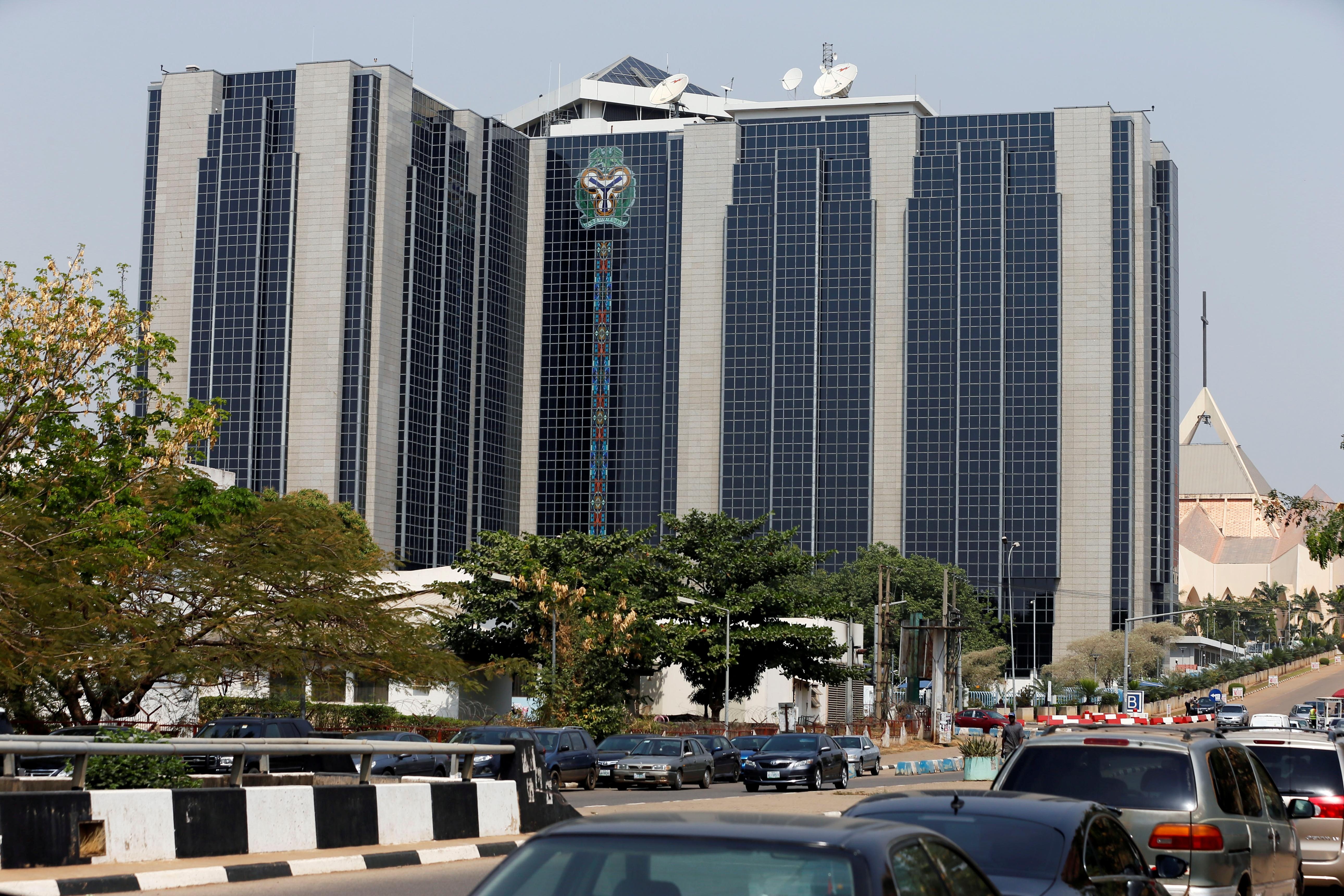
A shortage of foreign currency can make it harder for governments to pay for imports, service external debt and stabilize their economies.
Where does the IMF get the money it lends?
One common misconception is that the IMF simply creates money and hands it to countries.
The reality is more complicated.
The IMF is funded primarily by quotas paid by its member countries. These quotas broadly reflect the size and position of each country's economy and also influence how much a country can borrow and its voting power within the institution.
The IMF also supplements its resources through multilateral and bilateral borrowing arrangements.
As of mid-December 2023, the IMF reported total resources of roughly SDR 982 billion, with lending capacity of about SDR 695 billion, equivalent at the time to roughly US$932 billion.
In simple terms, the IMF operates somewhat like a financial cooperative for countries.
Countries contribute resources to the institution, and the IMF uses those resources to provide financing to members experiencing financial difficulties.
For its regular lending, the IMF can draw on the currencies of financially strong member countries and convert them into currencies that can be used internationally
So how does an IMF loan actually work?
The process generally follows several stages.
1. A country asks for help
The process normally begins when a government approaches the IMF because it needs financial assistance.
The government and IMF staff then assess the country's economic situation.
They examine issues such as government finances, inflation, debt, foreign-exchange reserves, economic growth, the exchange rate and the country's ability to repay.
The IMF also examines whether the country's financing needs are temporary or likely to continue for several years.
2. The IMF and government negotiate a program
This is one of the most important parts of the process.
The IMF does not normally decide unilaterally what a country must do.
The government and IMF staff negotiate an economic program containing targets and policy measures intended to address the country's problems.
The agreed program is normally described in documents such as a Letter of Intent and a Memorandum of Economic and Financial Policies.
The IMF says borrowing governments have primary responsibility for designing and implementing their economic programs, although the programs are developed jointly with IMF staff.
3. The IMF agrees on conditions
This is where the phrase "IMF conditionality" comes in.
The money is generally not provided without requirements.
Conditions can include targets for government spending, tax collection, foreign-exchange reserves, public debt, central-bank financing and other economic indicators.
There can also be specific reforms.
These might involve improving tax administration, restructuring state-owned enterprises, strengthening financial-sector regulation or reducing government arrears.
The IMF groups these conditions into categories including prior actions, quantitative performance criteria and indicative targets.
The logic is straightforward: the IMF wants the borrowing country's economy to become strong enough to repay the money and avoid returning to the same crisis.
4. The IMF's Executive Board approves the program
After negotiations, IMF staff present the proposed program to the IMF Executive Board.
The Board must approve the financial arrangement before the money can be released.
Once approved, the country does not necessarily receive the entire amount immediately.
This is one of the most important things to understand about IMF lending.
5. The money is usually released in installments
An IMF program can last several years, but the money is generally released in stages.
Before another disbursement, IMF staff review the country's performance.
If the country has met the agreed targets, the IMF Board can approve the next disbursement.
If targets have not been met, the government may request a waiver, modification of the conditions or changes to the program.
This means an IMF loan is more like a series of payments linked to an economic program than one large cheque.
Kenya, for example, received multiple disbursements under its Extended Fund Facility and Extended Credit Facility arrangements after successive program reviews.
IMF financing is generally released in stages, with further disbursements linked to reviews of a country's economic program
Case Study 1: Kenya
Kenya provides a useful example because the country has used several IMF-supported arrangements while dealing with high financing needs, debt pressures and foreign-exchange challenges.
Kenya's IMF program has included the Extended Fund Facility (EFF) and Extended Credit Facility (ECF).
The EFF is generally designed for countries facing longer-term balance-of-payments problems, while the ECF provides concessional financing to eligible low-income countries with longer-lasting external financing problems.
Kenya also received support through the IMF's Resilience and Sustainability Facility (RSF), which is designed to help countries address longer-term challenges such as climate-related vulnerabilities.
In October 2024, the IMF Executive Board completed Kenya's seventh and eighth reviews under the EFF and ECF arrangements and a review under the RSF.
The decision enabled approximately US$606 million in combined disbursements. The IMF said the financing was intended to help rebuild fiscal and external buffers and strengthen resilience to climate shocks.
The IMF's records show that Kenya received separate disbursements under the EFF, ECF and RSF during 2024.
But the Kenyan case also illustrates why IMF programs can become politically sensitive.
The government has had to balance raising domestic revenue with protecting essential spending while meeting significant debt-service obligations.
The IMF itself noted that revenue shortfalls and public resistance to some revenue measures complicated Kenya's fiscal consolidation efforts.
What does Kenya's experience teach us?
Kenya demonstrates that IMF lending is not simply about receiving foreign currency.
The financing is accompanied by an economic reform program.
The objective is to stabilize the economy, rebuild reserves and restore investor confidence while putting government finances on a more sustainable path.
But the reforms can be politically difficult when they involve higher taxes, spending restraint or other measures that affect households and businesses.
Kenya has used IMF financing to strengthen foreign-exchange reserves, support fiscal adjustment and address longer-term economic vulnerabilities
Case Study 2: Ghana
Ghana offers an even clearer example of what happens when an IMF program is combined with a major debt crisis.
In 2022, Ghana experienced severe economic and financial pressures, including very high inflation, falling investor confidence and growing debt difficulties.
The government subsequently sought IMF assistance.
In May 2023, the IMF approved a US$3 billion, 36-month Extended Credit Facility arrangement for Ghana.
The program was intended to restore macroeconomic stability and debt sustainability while creating conditions for stronger and more inclusive growth.
But Ghana's IMF program was not just about the IMF providing money.
The country also had to undertake significant economic reforms and restructure its debt.
By 2024, Ghana had reached agreements with official creditors under the G20 Common Framework and was also working on restructuring its Eurobond debt.
The IMF subsequently released additional funds after completing reviews of Ghana's performance.
For example, in July 2025, the completion of the fourth review allowed an immediate disbursement of approximately US$367 million. The IMF said Ghana's performance had deteriorated at the end of 2024 because of fiscal slippages, inflation above program targets and delays in reforms, although the authorities later took corrective measures.
By December 2025, the IMF said Ghana's fifth review had been completed and another approximately US$385 million was disbursed, bringing total disbursements under the arrangement to about US$2.8 billion.
What does Ghana's experience teach us?
Ghana shows that IMF financing can be part of a much larger economic rescue operation.
The IMF money can provide foreign financing and help restore confidence, but it cannot solve a debt crisis by itself.
Ghana also needed debt restructuring, fiscal reforms, stronger revenue collection and changes in public financial management.
In other words, an IMF loan can buy a country time, but the country still has to fix the underlying economic problems.
Ghana's IMF program has been closely linked to fiscal reforms and a major restructuring of the country's public debt
Why are IMF loans controversial?
The IMF's supporters argue that its programs can prevent economic crises from becoming even worse.
A country that has run out of foreign currency may otherwise face severe shortages of imports, a collapsing currency, accelerating inflation and difficulty servicing external debt.
IMF financing can provide breathing room while reforms are implemented.
The IMF also argues that its programs can help restore investor confidence and attract financing from other international institutions and governments.
But critics point to the social and political costs.
Governments receiving IMF assistance may have to reduce spending, increase taxes, remove subsidies or implement other unpopular reforms.
Such measures can increase the cost of living in the short term, particularly when households are already struggling.
This is why IMF programs can generate protests and political opposition.
The central question is often not whether a country needs economic adjustment, but who should bear the cost of that adjustment and how quickly it should happen.
Are IMF loans expensive?
It depends on the type of IMF financing. The IMF has different lending facilities for different groups of countries.
For countries borrowing through its General Resources Account, financing is generally provided on non-concessional, market-related terms.
For poorer countries eligible for the IMF's Poverty Reduction and Growth Trust, financing is more concessional.
The Extended Credit Facility, for example, is designed for low-income countries with longer-term balance-of-payments problems.
The IMF changed the interest-rate structure for new concessional lending from May 1, 2025. The poorest eligible countries can receive ECF financing at a zero interest rate, while other eligible countries fall into higher interest-rate tiers.
This distinction matters because it means there is no single "IMF interest rate" that applies to every African country.
Does the IMF give countries cash to spend however they want?
Not exactly.
IMF financing is fundamentally aimed at addressing a country's external financing and macroeconomic problems.
It is different from a development-bank project loan that might be specifically allocated to construct a road, dam or hospital.
In some programs, IMF resources can provide budget support, helping a government meet its financing needs while it implements the agreed economic program.
Kenya's IMF program, for example, has included financing provided to the government as budget support and balance-of-payments support.
The money therefore forms part of a broader financial package rather than operating as a free-standing development project.
What happens if a country fails to meet the conditions?
Failure to meet a target does not automatically mean the entire IMF program disappears.
The IMF can examine why a target was missed.
Depending on the circumstances, the government may receive a waiver, the target may be modified or the program may be adjusted.
But serious or repeated failures can delay the release of the next installment.
That is why IMF reviews are so important.
They effectively determine whether the country has made enough progress for the next portion of financing to become available.
Ghana's experience demonstrates this clearly: program reviews have assessed fiscal performance, reforms and debt restructuring before additional financing was released.
The bigger picture: IMF money is only part of the solution
For African governments, an IMF program can provide something extremely valuable: time.
It can help a country stabilize its finances while it works on deeper problems.
But IMF financing does not automatically create jobs, build infrastructure or eliminate poverty.
Those outcomes depend on what governments do with the breathing space provided by the program.
The strongest outcome is therefore not simply that a country receives an IMF loan.
It is that the country eventually reaches a position where it does not need emergency IMF financing again.
Kenya's experience highlights the importance of rebuilding fiscal and foreign-exchange buffers, while Ghana demonstrates how IMF financing can work alongside debt restructuring and broader economic reforms.
The ultimate goal of IMF-supported programs is not simply to provide loans, but to help countries restore economic stability and become less vulnerable to future financial crises.
The simple answer
So, how does the IMF lend money to African countries?
A country faces an economic or balance-of-payments problem → it requests IMF assistance → IMF staff assess the economy → the government and IMF negotiate a reform program → the IMF Executive Board approves the arrangement → money is released in installments → IMF reviews progress → further installments follow if the program remains on track.
The money comes largely from resources provided by IMF member countries, while the borrowing country agrees to economic policies designed to stabilize its finances and restore its ability to meet external obligations.
For countries such as Kenya and Ghana, the IMF can therefore be an important financial lifeline.
But it is not free money.
It is financing tied to a plan — and the success of that plan ultimately depends on the country's ability to carry out reforms, protect vulnerable citizens and build an economy strong enough to stand on its own.
Please complete the verification below to continue.
Please complete the verification
Human verification passed
Edit Comment
Delete Comment
Are you sure you want to delete this comment?
This action cannot be undone.
Loading comment content...
We value your privacy
We use cookies to enhance your browsing experience, serve personalized content, and analyze our traffic. By clicking "Accept All", you consent to our use of cookies. You can manage your preferences at any time. Learn more.
Cookie Settings
We use cookies to improve your experience on our site. You can choose which cookies to allow. Read our full Cookie Policy.
Essential CookiesRequired
These cookies are necessary for the website to function properly and cannot be switched off.
Analytics & Performance
These cookies help us understand how visitors interact with our website by collecting anonymous information.
Functional Cookies
These cookies enable enhanced functionality and personalization, such as remembering your preferences.
Targeting & Advertising
These cookies may be used by advertising partners to build a profile of your interests and show you relevant ads.













Comments (0)
No comments yet. Be the first to share your thoughts!