

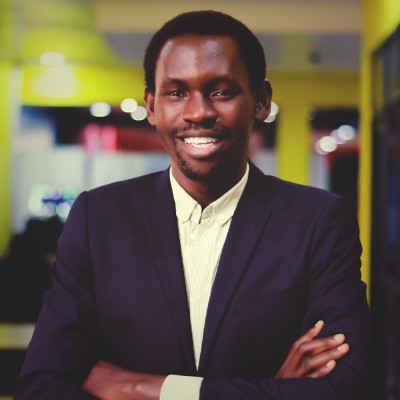

Kenya’s food system is facing growing pressure from climate change, rising production costs, waste and the need to feed a growing population. For agriculture researcher and mentor Charity Kelsey, part of the answer lies in regenerative approaches that bring together food production, environmental conservation and new technologies. Kelsey works across insect farming, aquaponics, regenerative agriculture, climate action and youth mentorship. She also works with farmers and young people in Kenya, where she promotes approaches designed to make agriculture more sustainable while creating economic opportunities.

In an interview with Africa Pro 24 Media, Kelsey spoke about the potential of aquaponics and black soldier fly farming, the importance of linking research to farmers, and why young people must be involved in decisions about policies that affect them.
Caleb Koyo: What first drew you to regenerative agriculture?
Charity Kelsey: My love for agriculture started when I was in high school. That passion eventually led me into circular and regenerative agriculture, particularly through my interest in insects.
Another important moment came when I undertook my first consultancy job in this field at the age of 24. That experience made me realize there was something significant in agriculture.
When that motivation was combined with my passion, I found a purpose: solving agricultural problems while helping farmers become more environmentally sensitive in their production.
Caleb Koyo: How would you explain regenerative agriculture to a smallholder farmer?
Charity Kelsey: Regenerative agriculture is about being environmentally sensitive. Whether you are producing fish through aquaculture or growing crops, you need to be sensitive to the environment.
We are living on a planet where the environment has deteriorated, so we need to ask ourselves how we can contribute to healing it. In simple terms, regenerative production means producing food in an environmentally sensitive way.
Caleb Koyo: Aquaponics promises water savings and circular nutrient use. Can it work for small and medium-sized farmers in Kenya?
Charity Kelsey: It is very realistic. The challenge is that the initial installation cost can be relatively high. However, farmers can be innovative and use locally available materials.
Aquaponics integrates fish and vegetables. You need a fish tank and grower beds. Water moves from the fish tank to the grower beds, where bacteria help convert ammonia into nutrients that plants can use. The water then moves through the system and returns to the fish tank. It becomes a continuous cycle.

Caleb Koyo: Does the system require energy?
Charity Kelsey: Yes. The pumps used for water circulation and aeration require energy. We encourage farmers to use green energy, particularly solar energy. This can reduce dependence on electricity while making the system more climate smart.
Caleb Koyo: Are there working examples of these systems in Kenya?
Charity Kelsey: Yes. These projects are meant to help people and are not supposed to remain within the university. We have onboarded farmers in different parts of Nakuru County. There is a farmer called Kipruto who has a fishpond and uses water from the pond to irrigate vegetables. In Njoro, we have Joseph, who also uses water from his fishpond to irrigate vegetables. The impact is already there, and we continue onboarding farmers interested in adopting these systems.
Caleb Koyo: How ready is black soldier fly farming for mainstream agriculture in Kenya?
Charity Kelsey: I think it is very ready nutritionally. However, there is still a challenge because many people do not understand the economic sense of black soldier fly production. That creates a challenge for large-scale production. We are also not necessarily trying to completely replace existing protein sources. The goal is to reduce their use by introducing alternative sources of protein.
Caleb Koyo: Why are farmers interested in black soldier fly?
Charity Kelsey: When you talk about black soldier fly, you are not only talking about an alternative source of protein or organic fertilizer. You are also talking about organic waste management. Farmers are passionate because they are also contributing to environmental conservation.
Caleb Koyo: Farmers often say researchers collect information from them but fail to take the findings back to communities. Why does this continue to happen?
Charity Kelsey: I used to think about research differently until I became a researcher. Researchers have their own role, but they are also vehicles that need to help move research back to the people.
When researchers conduct field research, they should work with the people responsible for taking the findings back to communities. These include policymakers.
Researchers should report their findings to policymakers and explain how the findings could inform policy.
Caleb Koyo: What role can living labs play in connecting researchers, policymakers and farmers?
Charity Kelsey: Living labs involve stakeholders from the beginning. There are the thinkers, such as researchers and research institutions; the enablers, including policymakers and financial institutions; and the doers, such as farmers. This collective approach allows everyone to play their role from the beginning rather than bypassing existing structures. 
Caleb Koyo: If you had one policy priority for young people in agriculture, what would it be?
Charity Kelsey: I would advocate for the inclusion of young people in the tables where policies are being developed. Many people in positions of power assume they know what young people want. They create policies for young people and then bring them to us. But we always say: “Whatever is for us without us is not for us.” Young people need proper representation in policy-making spaces. It should not simply be about selecting someone because you know them. We need clear and meaningful youth representation. It is not fair to make decisions about young people without young people. We want to be at the table.
Caleb Koyo: You also mentor young people. What are you trying to achieve through that work?
Charity Kelsey: I mentor young people from different TVET institutions and universities. The programme began with an agritech hackathon and developed into a post-hackathon mentorship programme. We want young people not only to see themselves as developers but also to understand the business aspect of the problems they are solving through technology. My work with women and young women also focuses on mentorship, empowerment, leadership development and climate action. For me, it is about passing the microphone to other girls and giving them the opportunity to have the conversations they want to have.
Caleb Koyo: If you had to choose one measurable goal for 2030, what would it be?
Charity Kelsey: When I think about 2030, I think about the Sustainable Development Goals. If I had to choose one, I would focus on SDG 17, which is about partnerships.
I would like to see all 47 counties in Kenya reduce the amount of waste they generate. Different counties have different levels of waste, but by 2030 I would like to see a significant reduction across the country and a cleaner environment.

Caleb Koyo: What should funders, students, county officials and others remember about regenerative food systems?
Charity Kelsey: We have a joint responsibility to take care of our environment. But as we do that, we also need to understand the importance of making a profit. The financial aspect matters. When we talk about regenerative systems, people should always remember the three Ps: People, Planet and Profit.
If you are a young African innovator, founder, creator, researcher or changemaker shaping the continent’s future, send a message to Caleb Koyo on LinkedIn. Follow Charity Kelsey on LinkedIn to keep up with her work in regenerative agriculture, climate action, innovation and youth mentorship.





Comments (0)
No comments yet. Be the first to share your thoughts!