


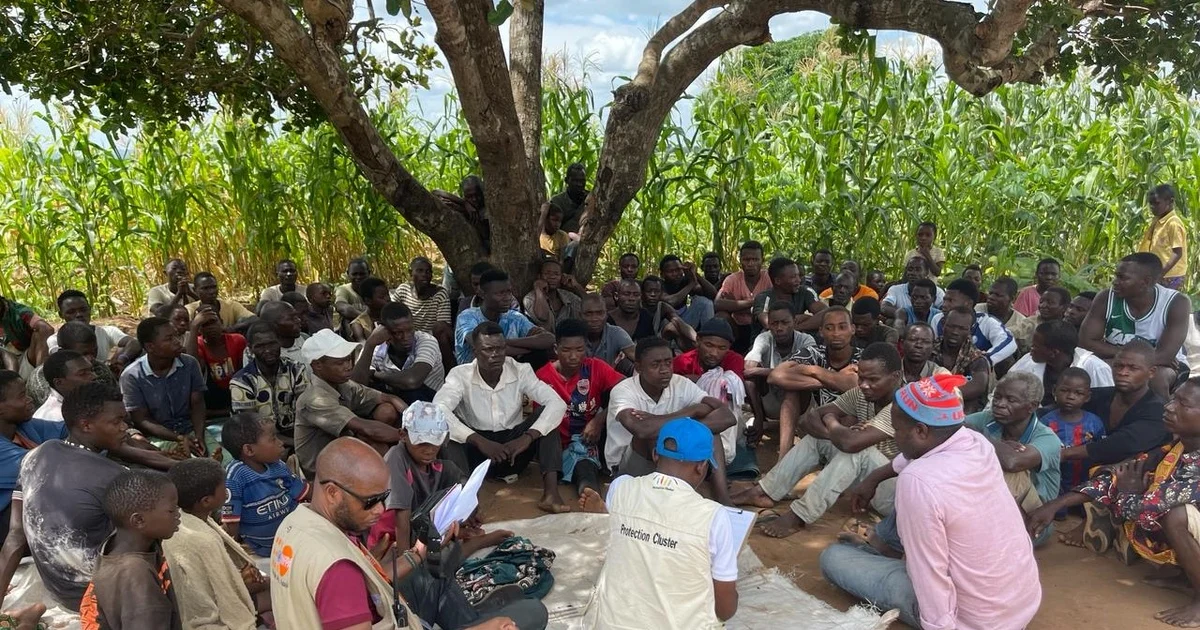
According to the 2026 Humanitarian Needs and Response Plan (HNRP), approximately 1.1 million people across northern Mozambique need humanitarian assistance, including 919,000 in Cabo Delgado province alone. These individuals live in eight districts classified as Severity 4—the highest level of need: Ancuabe, Chiúre, Macomia, Mocímboa da Praia, Mueda, Muidumbe, Nangade and Quissanga.

Displacement Surge
The crisis has been driven by relentless violence. In June alone, the United Nations Office for the Coordination of Humanitarian Affairs recorded 12,174 newly displaced persons as a result of the Islamist insurgency that has plagued the province since 2017. This brings the total number of people displaced since the beginning of the year to over 26,000.
Women and children bear the heaviest burden, accounting for approximately 80 percent of those displaced in June. Protection partners have reported serious concerns related to family separation, gender-based violence, loss of documentation and psychosocial distress.
"Although monthly displacement figures remained below those recorded during much of 2025, the increase observed over the last two months demonstrates the fragility of the security situation in northern Mozambique," OCHA noted in its report.
A Crisis of Repeated Displacement
Perhaps most alarming is the pattern of repeated displacement. According to OCHA, a significant portion of displacement movements this year involve people who have been forced to flee multiple times. The data reveals:
- 2,562 people displaced for the first time in 2026
- 7,922 for the second time
- 657 for the third time
- 2,769 for the fourth time
- 12,274 on five or more occasions
This highlights the prolonged vulnerability of communities caught in a cycle of violence that shows no sign of abating. The International Organization for Migration confirms that "all the affected households are facing consecutive displacements, having already been forced to flee on previous occasions since the humanitarian crisis began in 2017".
Funding Shortfall
Humanitarian efforts have been severely hampered by a critical funding shortfall. The UN's 2026 appeal for Mozambique sought US$348 million to address the country's protracted crises. Six months into the year, only US$116 million (34 percent of the required amount) had been raised.
By the end of April 2026, the humanitarian community had reached approximately 476,000 people (42 percent of the 1.1 million target population). In the most severely affected districts (Severity 4), relief efforts reached only 263,000 people against a target of 919,000.
"The funding shortfall is affecting several sectors of the humanitarian response, with a special impact on education, logistics, and nutrition, threatening to leave vulnerable families without adequate support to meet their most urgent needs," OCHA warned.
New Humanitarian Initiatives
Despite the challenges, humanitarian organizations are scaling up their response. A consortium led by Johanniter International Assistance, in partnership with Ayuda en Acción, Acted, and ADPP Mozambique, has launched a 12-month program co-financed by the European Union's Humanitarian Aid.
The program will operate in Mocímboa da Praia and Mecúfi—two of the districts hardest hit by conflict and displacement—providing health, nutrition, protection, education, and cash assistance. The education component will continue until 2027.
"In the face of persistent conflict, displacement and climate shocks in Cabo Delgado, our consortium is committed to restoring life-saving health, nutrition, protection, education and cash assistance to the most vulnerable with dignity, inclusion and care," said Morris Kolubah, Country Director for Johanniter in Mozambique.
Healthcare Crisis
Access to healthcare remains severely constrained. Médecins Sans Frontières (MSF), responding to the latest resurgence of violence in Ancuabe district, carried out over 1,500 consultations in just a few weeks, treating an average of more than 150 patients per day. The most common conditions were upper respiratory tract infections, skin diseases, and malaria.
MSF teams also observed a growing need for mental health care, with many people reporting sleep disturbances, stress-related symptoms, body pain, and palpitations linked to uncertainty about the future, repeated displacement and difficult living conditions.
"Currently, there are no mental health professionals at the local health centre," MSF noted, highlighting the critical gap in services.
Security Context
The security situation in Cabo Delgado remains volatile. According to the Armed Conflict Location and Event Data Project (ACLED), 11 violent events were recorded in the first two weeks of June alone, all involving extremists associated with the Islamic State and resulting in at least eight deaths.
The crisis has also had significant economic consequences. French energy giant TotalEnergies suspended its multi-billion-dollar offshore gas projects near Palma due to the security situation, with operations only expected to resume gradually by the end of 2026.
A Protracted Crisis
The insurgency in Cabo Delgado began in October 2017, when the armed group Al-Shabaab (now affiliated with the Islamic State) carried out its first attack in Mocímboa da Praia. Since then, the group has combined jihadist ideology with propaganda targeting the region's extractive industries, particularly its gas-related activities.
According to ACLED, of the 2,408 violent events recorded between October 2017 and June 2026, 2,224 have involved elements associated with the Islamic State in Mozambique. The total number of fatalities since the start of the insurgency has reached 6,632.
What Happens Next
The crisis in Cabo Delgado has evolved into a protracted humanitarian emergency with no quick solution in sight. While efforts like the UNDP's US$28 million RISE-PS programme aim to support long-term recovery—rehabilitating community facilities, generating 4,500 jobs, and supporting vulnerable youth and women—immediate humanitarian needs remain vast.
Aid agencies are calling for urgent financial and logistical resources to prevent thousands of families from remaining deprived of essential goods and healthcare. As one aid worker put it: "Without additional international support, the situation for hundreds of thousands of people threatens to deteriorate further".












Comments (0)
No comments yet. Be the first to share your thoughts!