


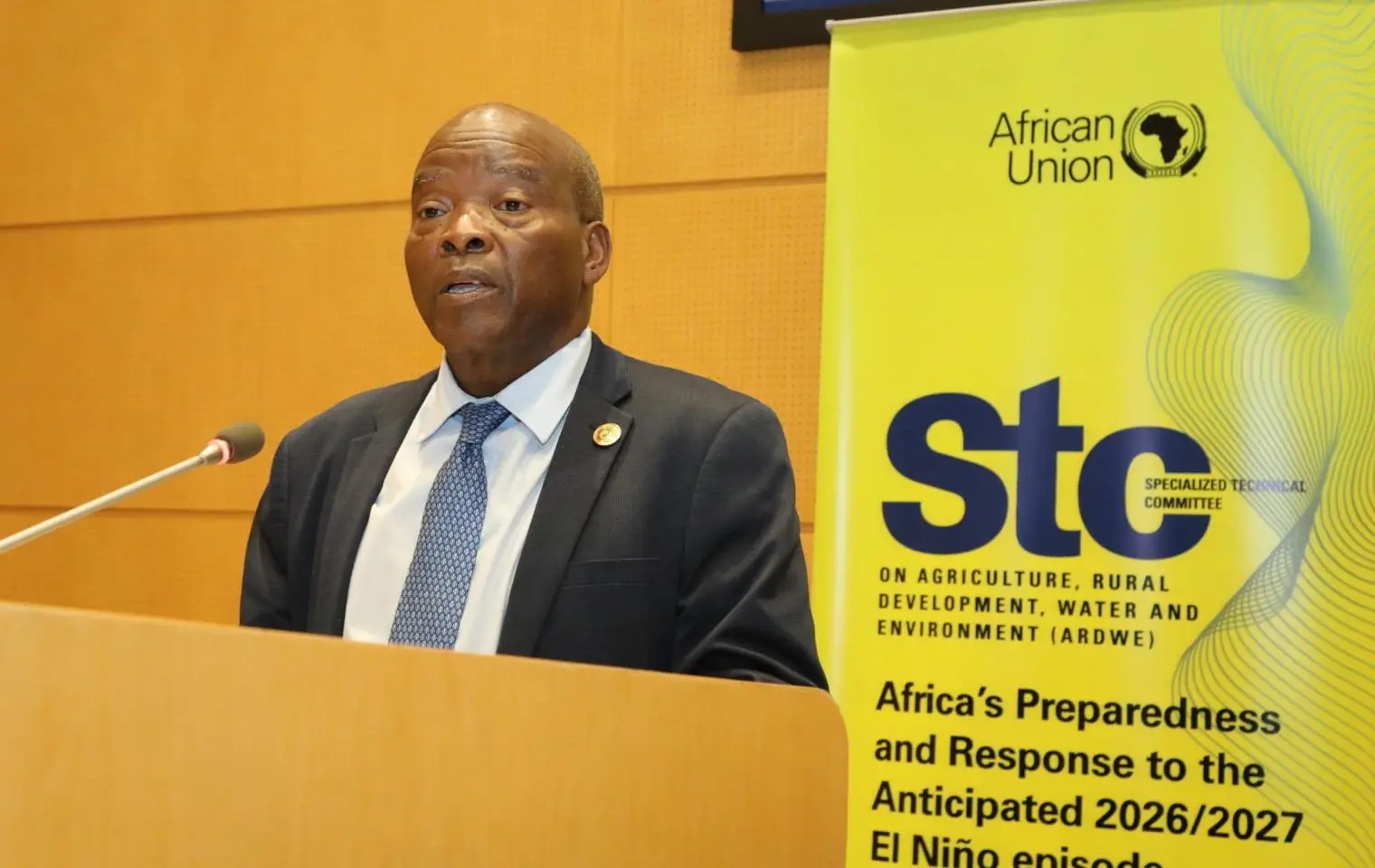
Speaking at an extraordinary ministerial meeting in Addis Ababa, AU Commissioner for Agriculture, Rural Development, Blue Economy and Sustainable Environment Moses Vilakati stressed that the projected event could become the strongest since 1950 and that African nations must move quickly from early warning to early action.
"This is not a distant possibility. It is an imminent risk that demands immediate preparation at national, regional and continental levels," Vilakati said. "The difference between a manageable crisis and a humanitarian disaster will be determined by what we do before the impacts arrive."
$10 Billion to $20 Billion Economic Hit
The African Development Bank has warned that a severe El Niño could inflict $10 billion to $20 billion in economic losses across affected African countries while triggering displacement and migration in some of the hardest-hit regions.

The AU has identified Sudan, South Sudan, the Democratic Republic of Congo, Somalia, Mali, Burundi and Nigeria as countries that could face particularly severe humanitarian challenges, including food shortages and displacement.
"These impacts will not only affect vulnerable households; they will also place considerable pressure on national economies, public finances and regional stability. This is neither speculative nor unprecedented. We have already witnessed the devastating consequences of delayed action," Vilakati warned.
Lessons from 2023-2024: A Painful Reminder
The AU and AfDB officials repeatedly referenced the devastating impacts of the 2023-2024 El Niño, which caused severe drought in Southern Africa and heavy rains and flooding in East Africa.
Six countries in the Southern African Development Community declared national states of disaster after crops failed across major grain-producing zones, hydropower production declined to record lows, food prices escalated and over 60 million people required humanitarian assistance.
Eastern Africa experienced unprecedented flooding that displaced over 480,000 people, destroyed critical infrastructure and claimed more than 500 lives.
"These events were not isolated natural disasters; they were stark reminders of how climate variability, compounded by climate change, threatens decades of socio-economic progress across our continent," said Harsen Nyambe, AUC Director for Sustainable Environment and Blue Economy.
High-Risk Countries and Regional Impacts
According to the AU, many regions of the continent are likely to experience severe droughts and prolonged dry spells, devastating floods and landslides, prolonged heatwaves, disruptions to food production, water shortages, disease outbreaks and increased humanitarian needs.
The El Niño phenomenon, though originating thousands of miles from Africa in the warming of the Pacific Ocean, alters global atmospheric circulation, shifting rainfall patterns and temperatures across much of the continent.
Southern Africa is expected to face below-average rainfall during the main growing season, with strong El Niño events often linked to drought, reduced agricultural production, water shortages and increased food insecurity. Countries such as Zimbabwe, Zambia, Malawi, Botswana and parts of South Africa could experience poor harvests, livestock losses and declining hydropower generation.
East Africa could face heavier-than-normal rainfall that increases the risk of flooding, landslides and disease outbreaks, with impacts on infrastructure, displacement of communities and disruption of economic activity in countries including Kenya, Somalia, Ethiopia and Tanzania.
Africa's Preparedness Efforts
Despite the warnings, Africa has made considerable progress over the past decade in strengthening climate observation systems, seasonal forecasting capacities, climate services and early warning mechanisms through the leadership of member states, Regional Economic Communities, the African Centre of Meteorological Applications for Development and programmes such as ClimSA.
However, officials stressed that climate information only becomes valuable when it informs decisions, shapes public policy and reaches farmers, pastoralists, disaster management authorities, health workers and communities making daily decisions to safeguard their families.
"Climate information only becomes valuable when it informs decisions, shapes public policy and reaches farmers preparing for the planting season," Nyambe said.
A Call for Action
The extraordinary session was convened to assess Africa's preparedness, strengthen early warning and anticipatory action, and support implementation of Agenda 2063 and preparations for COP31 and COP32.
"Our citizens expect more than discussions. They expect preparedness. They expect coordination. They expect leadership. Above all, they expect action," Nyambe said.
With reporting from Xinhua, allAfrica.com, Channel Africa, teleSUR and the African Union.





Comments (0)
No comments yet. Be the first to share your thoughts!