

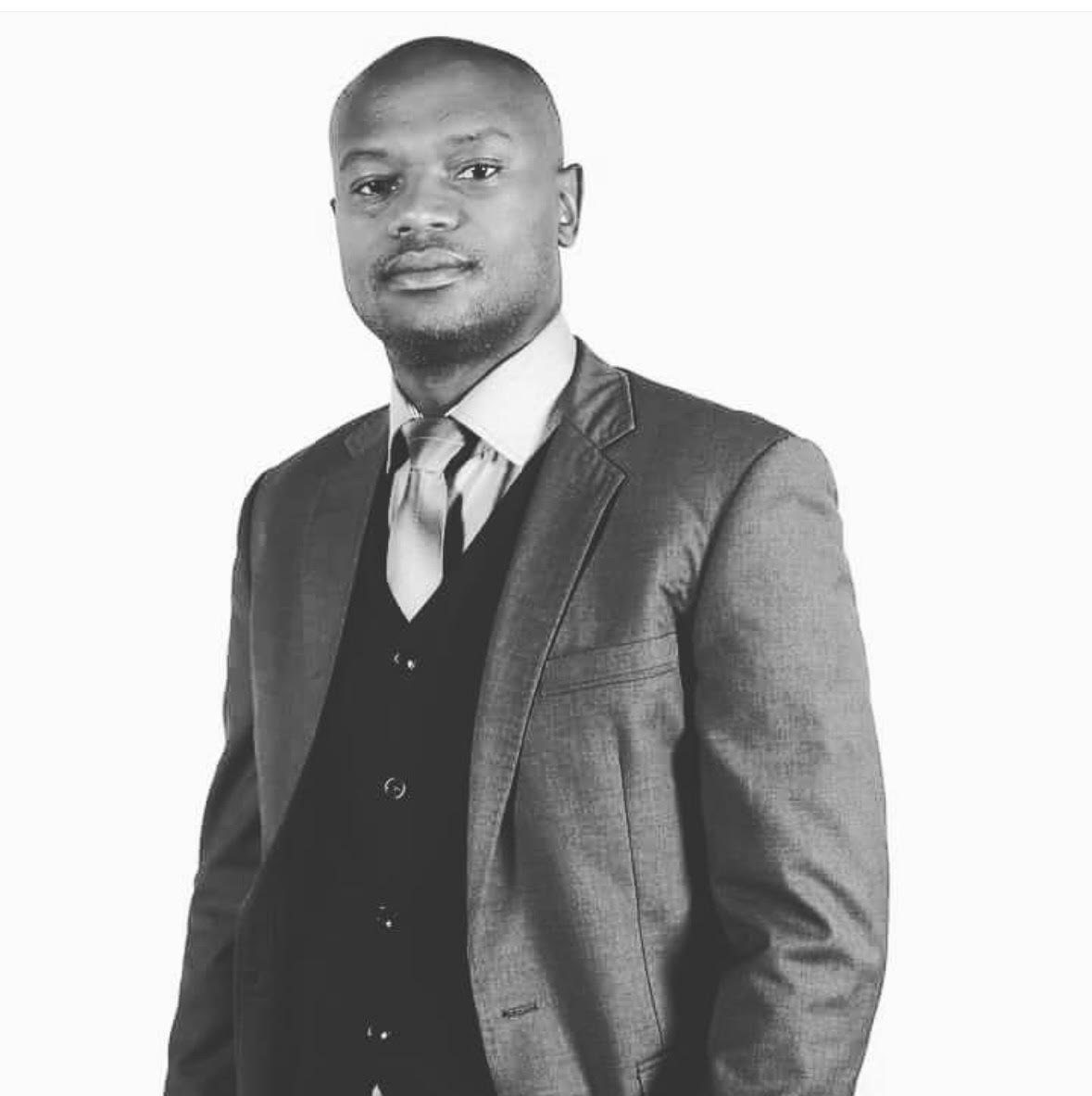

Finance Minister Enoch Godongwana has announced temporary fuel levy relief, increased funding for municipalities and social services, and directed additional resources to fight crime. This comes as Godongwana said the government is looking to ease pressure on households while stabilising South Africa’s public finances. Delivering the 2026 Medium-Term Budget Policy Statement (MTBPS), Godongwana said the government’s fiscal consolidation measures were beginning to produce results, despite weaker economic growth and continued global uncertainty. “The difficult choices of the past few years were made for a purpose. To restore stability today so that we can build a faster-growing, more inclusive and more resilient economy tomorrow,” he said.

South Africa’s economic growth forecast for 2026 has been revised down to 1.2%, from the 1.6% projected in February. Higher fuel prices, geopolitical conflict and the effects of El Niño have weighed on the outlook. Growth is expected to improve to 1.6% in 2027 and reach 2% by 2029. Despite the weaker outlook, the government has made progress in stabilising its finances.
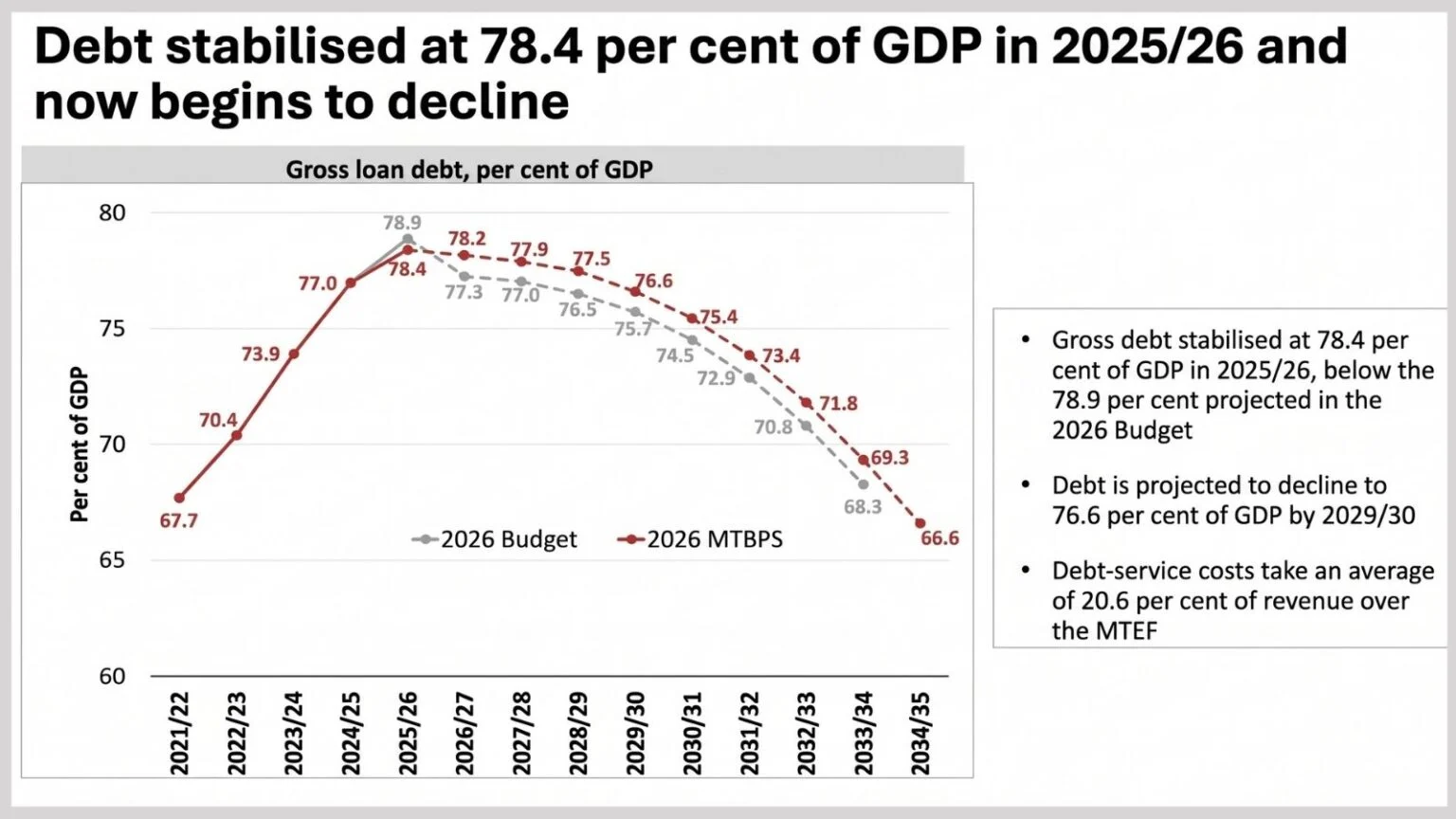
The debt-to-GDP ratio stabilised at 78.4% in the 2025/26 financial year and has started to decline, marking a significant milestone after years of rising debt. “Debt as a percentage of GDP is now falling, creating a stronger foundation for investment, growth and job creation,” Godongwana said.
The budget deficit is expected to narrow to 3.9% of GDP in the current financial year, better than the 4% forecast in February. It is projected to decline further to 2.5% by 2030. The primary budget surplus, which measures government revenue against spending excluding debt-service costs, is expected to increase from 1.7% of GDP to nearly 3% by 2030. Tax revenue estimates for 2026/27 have also been revised upwards by R17.1 billion, supported by corporate income tax, VAT and higher commodity prices. Government expenditure is expected to rise from R2.7 trillion this year to R3 trillion by 2029/30.
Temporary Fuel Relief From November
Godongwana announced a temporary reduction in fuel levies worth R10 billion, aimed at cushioning households and businesses against higher fuel costs. From 4 November to 1 December 2026, the fuel levy will be reduced by R3 per litre for diesel and R1.50 per litre for petrol. From 1 December 2026 to 5 January 2027, the relief will continue at R1.50 per litre for diesel and R1 per litre for petrol. The reductions are intended to provide temporary relief without undermining the government’s efforts to improve the public finances. “This intervention will help ease cost of living pressures without compromising the sustainability of the budget,” Godongwana said.
Social Grants And Child Nutrition Receive Support
Social spending remains a major part of the budget, accounting for 60% of non-interest expenditure. More than 11 million households benefit from free basic services, including water, electricity, sanitation and refuse removal. Government funding also supports 18.1 million social grant beneficiaries through old-age, disability and child support grants. The government has allocated R1.6 billion over the medium term for child nutrition, with a focus on maternal care and the first 1,000 days of a child’s life to help prevent malnutrition and stunting.
More Resources To Fight Crime And Gender-Based Violence
Godongwana announced R3.8 billion to recruit more than 3,500 social workers to prevent gender-based violence and support affected people. The number of sexual offence courts is expected to increase from 55 to 101, while Thuthuzela Care Centres, which assist rape survivors, will expand from 72 to 80. A further R810 million has been allocated to recapitalise the South African Police Service vehicle fleet, with R823 million set aside for military deployments targeting gang violence and illegal mining.
Digital Services And Municipalities Get Funding
The government also plans to spend R150 million developing the MyMzansi app, a digital platform intended to give citizens access to government services through their smartphones. Municipalities will receive an additional R3.5 billion over the medium term for smart meter rollouts, which are intended to improve billing accuracy and help municipalities manage electricity distribution. The local government’s equitable share will also receive an additional R21.8 billion to support basic services. Godongwana said municipal funding must translate into practical improvements for residents. “Every rand transferred to municipalities must translate into visible improvements in people’s daily lives,” he said.
With reporting from Reuters, Business Tech and National Treasury











Comments (0)
No comments yet. Be the first to share your thoughts!