



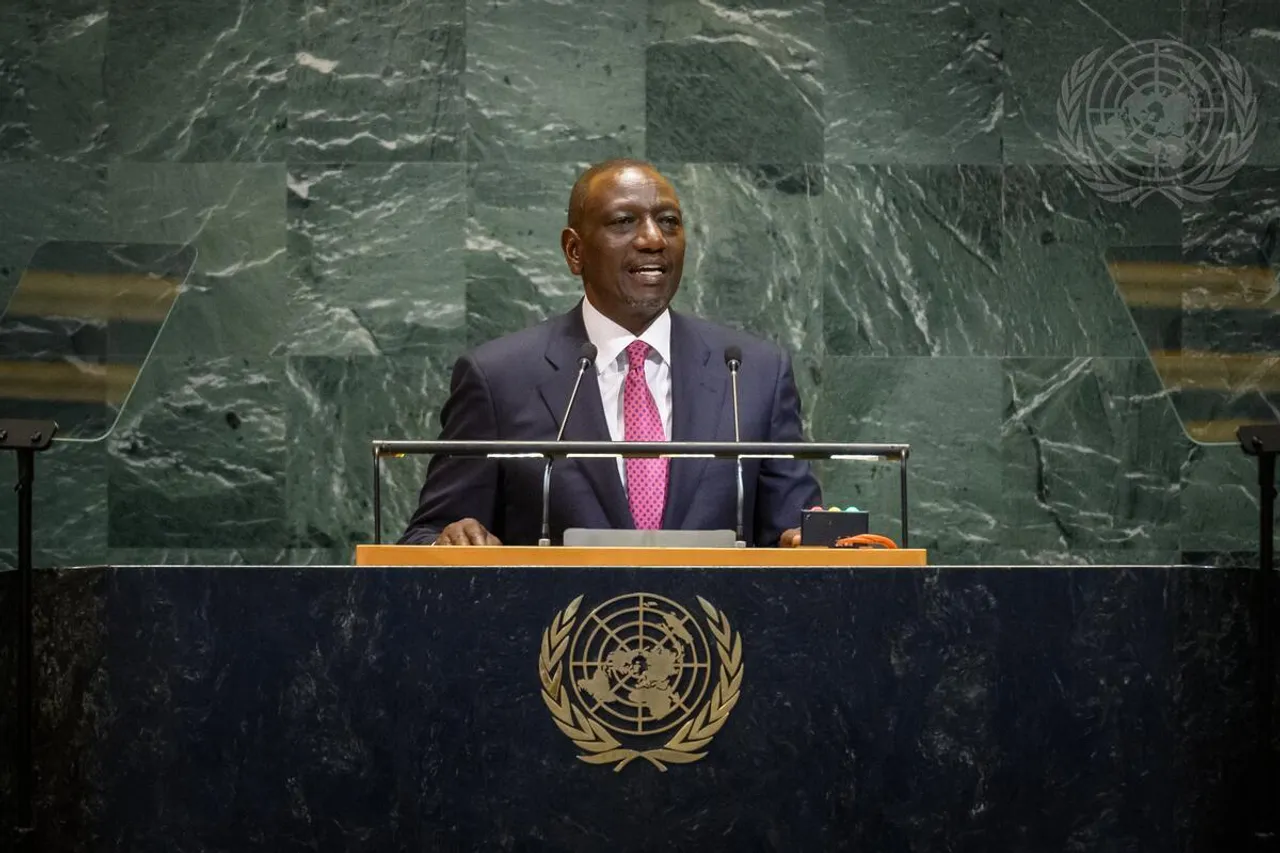
President Dr. William Ruto presided over the Kenya Health Summit 2026 at the Kenyatta International Convention Centre (KICC) in Nairobi on Tuesday, August 18, 2026, as the government takes stock of its health reforms and charts the next phase of Kenya's health transformation under Universal Health Coverage (UHC).
The two-day summit, running from August 18th to 19th, brings together national and county governments, health sector stakeholders, global partners, and innovators under the theme “REFORMS DELIVERED, HEALTH AS A RIGHT.”

The summit has shifted focus from policy formulation to implementation by the Kenyan government, particularly regarding Universal Health Coverage Under degitisation. Speaking during the opening ceremony, President William Ruto expressed his gratitude to all stakeholders for their support in achieving success in digital health transformation, improving efficiency at the Kenya Medical Supplies Authority (KEMSA), strengthening primary healthcare, enhancing maternal and newborn services, expanding specialized healthcare services, and enrolling more than 31 million Kenyans into the Social Health Authority (SHA).
Health System Digitization
President William Ruto centered his address on defending the digitization of Kenya's health sector and explaining the structural reforms under UHC. Addressing critics of the transition from the former National Hospital Insurance Fund (NHIF) to the Social Health Authority (SHA), President Ruto emphasized that digitization goes beyond replacing paper records with electronic systems.
"Digitization is not simply replacing paper with screens. It is about making every patient visible, every payment accountable, and every treatment traceable," he stated. He noted that establishing robust digital, legal, and institutional frameworks ensures that public health funds are tracked transparently to prevent financial leakages and misuse.
The discussions are expected to strengthen coordination among the national government, county governments, and international stakeholders across Africa. Additionally, the summit aims to analyze ways to improve accountability across health systems, providing a platform for Kenyans to raise concerns, share experiences, and voice their expectations for the country's healthcare system.
In 2025, South Africa had the highest Healthcare Index in Africa with a score of 63.8, followed closely by Kenya with 62 points—scores considered reasonably high for both nations. The Healthcare Index evaluates factors such as overall system quality, healthcare professionals, equipment, staffing, medical expertise, and cost.
Over the last two decades, digital health systems for hospitals and clinics have been rapidly adopted in high-income countries. Moving away from paper-based storage and retrieval of medical records creates opportunities for innovative care delivery and a better understanding of health service processes and outcomes. Along the way, however, high-income countries invested large sums while facing significant challenges and failures. Interoperability—sharing data seamlessly between different IT systems and facilities—and usability remain major barriers to maximizing the benefits of digital healthcare systems.
Low-income countries, including Kenya, are now following this trend by replacing paper-based records with digital systems. However, today's technology landscape differs significantly from the era when legacy systems in the UK, US, and Europe were built through large, rigid national procurement processes. Cloud-hosted systems, mobile devices, tablets, and the widespread adoption of open-source technology offer a more cost-effective path for countries looking to digitize healthcare. Kenya’s healthcare system is devolved, with health funding primarily managed by the country's 47 counties. The central government, through the Ministry of Health, supports county governments. In the digital health domain, the Ministry established an eHealth Unit to guide overall policy, set operational standards, and support national-level platforms such as the Master Facilities List (MFL) and District Health Information Software (DHIS2) for tracking national health metrics. The eHealth Unit, in collaboration with the Kenya Health Informatics Association (KeHIA), is also leading key national projects: creating a national unique patient identifier, establishing a certification framework for Health Information Systems (HIS), and utilizing the Digital Health Atlas to monitor HIS implementation across Kenya.
Milestones in Universal Health Coverage under Digital Systems
Expanded Coverage: Through digital systems Kenya has 32.3 million Kenyans are now registered under the Social Health Authority (SHA), up from 8 million beneficiaries under the defunct National Hospital Insurance Fund (NHIF).
Financial Disbursements: Since 2024, SHA has received over KSh 209 billion and paid out more than KSh 178 billion to contracted facilities across all 47 counties, serving 8 million citizens.
Primary Healthcare Support: Through the Primary Health Care Fund system, the government has disbursed KSh 23.3 billion to support over 20 million outpatient visits for 15 million Kenyans, alongside KSh 17 billion dedicated to maternal healthcare and delivery services.
Specialized Care Access: Under SHA through digital systems, the government has facilitated more than 500,000 surgeries nationwide and provided treatment to over 50,000 cancer patients—compared to just 7,000 under the previous NHIF framework.
Facility Expansion: The network of health facilities covered under SHA has expanded to over 10,700, ensuring Kenyans can access quality healthcare closer to home.
Grassroots Healthcare Workforce: In partnership with county governments, 107,800 Community Health Promoters (CHPs) have been recruited, equipped with medical kits, and deployed to household-level preventive care. They have reached 9 million households to detect early health dangers and connect families to care.
Supply Chain Efficiency: Digital tracking at the Kenya Medical Supplies Authority (KEMSA) has raised the medicine refill rate to over 91%, up from 40% three years ago, ensuring facilities remain consistently stocked.
Beyond the figures Kenyan government has achieved various objective: lives saved, mothers delivering safely, patients receiving timely care, and communities becoming healthier and more resilient.








Comments (0)
No comments yet. Be the first to share your thoughts!