



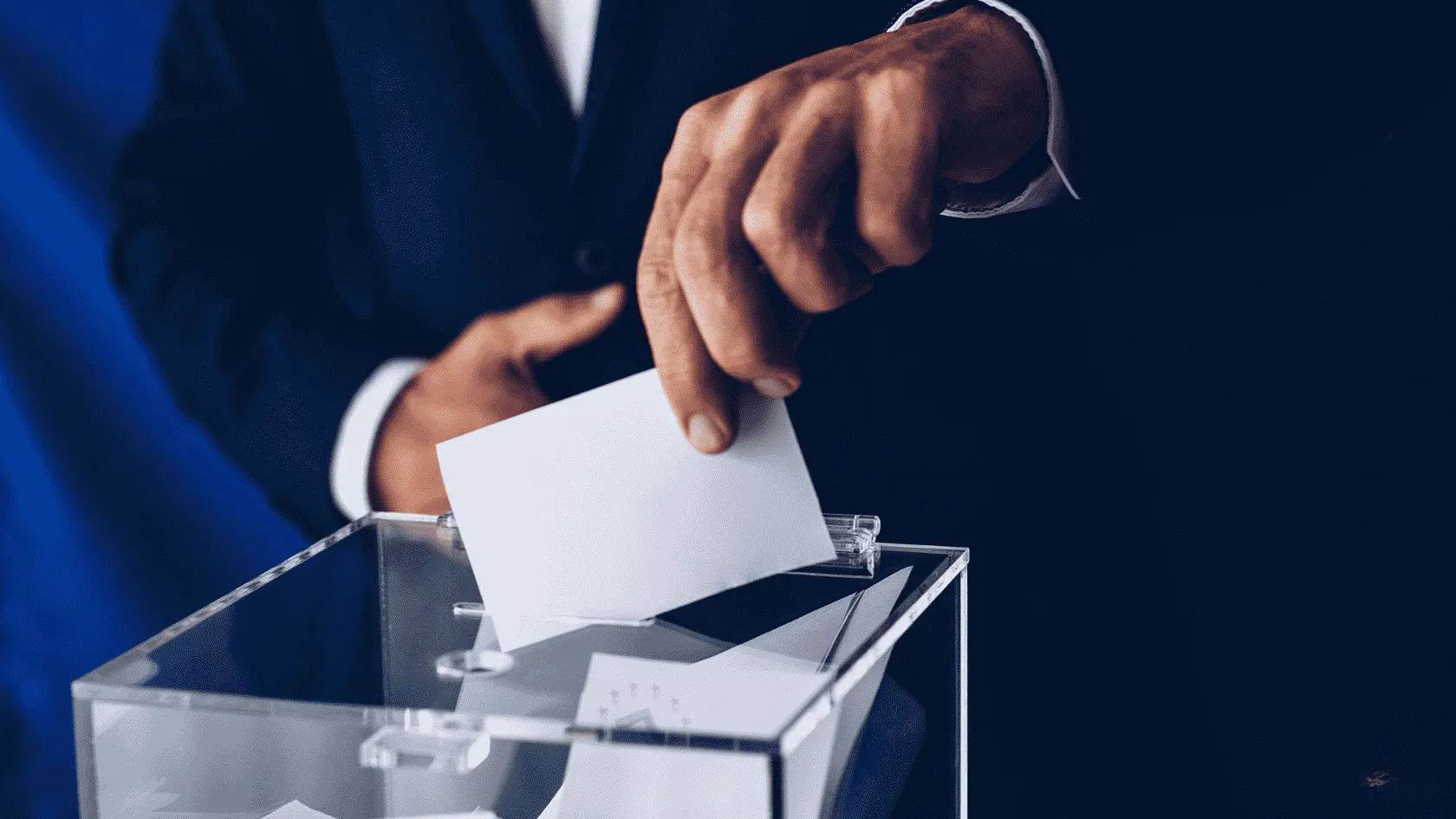
Zambia goes to the polls on Thursday, August 13, 2026, in a general election that will determine whether President Hakainde Hichilema wins a second term and whether his United Party for National Development (UPND) retains control of government. The Electoral Commission of Zambia (ECZ) says the final register contains 8,786,300 registered voters, with voting taking place at 13,529 polling stations across 116 districts and 226 constituencies.

Zambia is emerging from a sovereign debt crisis while trying to attract investment, expand its copper industry, create jobs and maintain economic reforms. At the same time, questions about political freedoms and the country's democratic institutions are adding another layer to the vote.
Zambians will vote for the president, National Assembly members and local government representatives on the same day. President Hakainde Hichilema is seeking a second five-year term. A former businessman who spent years in opposition, Hichilema won the 2021 presidential election against then-President Edgar Lungu, ending the Patriotic Front's period in power. His campaign has focused heavily on economic recovery, debt restructuring, investment, education and job creation.

The opposition is more fragmented. Brian Mundubile is among the principal challengers, while several other candidates are also competing for the presidency. Analysts expect Hichilema to be difficult to defeat, but the fragmented opposition creates uncertainty over how the vote will be distributed.
Zambia uses a majority system for the presidency. A presidential candidate must receive more than 50% of valid votes to win outright. If no candidate reaches that threshold, the top two candidates proceed to a second ballot, which must be held within 37 days. This means the size of the opposition vote matters. If several opposition candidates divide the anti-government vote, Hichilema could benefit even without overwhelming support. But if opposition voters consolidate behind one challenger, the race could become considerably tighter.
Voters will also determine the composition of the National Assembly, which will influence how easily the next government can pass legislation and implement its policies. This year's parliamentary election also comes after significant electoral reforms. Zambia has 226 constituencies, while the new system provides for additional proportional-representation seats intended to broaden representation for women, young people and people with disabilities. The parliamentary contest could therefore determine how much political room the next president has to govern.

Is Zambia's economic recovery reaching ordinary people?
This could be the defining issue for voters. When Hichilema took office in 2021, Zambia was dealing with the consequences of its sovereign debt default and difficult negotiations with creditors. His government subsequently oversaw a major restructuring of the country's external debt, supported by a $1.7 billion IMF programme, which ended in January 2026. Zambia is now seeking a new IMF programme focused more heavily on investment and growth.
The government can point to macroeconomic stabilization and renewed investor interest. But economic recovery on paper does not necessarily feel like recovery at household level.
For many voters, the more immediate questions are about:
- the cost of food;
- employment and incomes;
- electricity supply;
- education;
- public services; and
- whether economic opportunities are expanding.
Why electricity could determine Zambia's economic future
Zambia's economic ambitions face a major obstacle: power supply. The country relies heavily on hydropower, making its electricity system vulnerable to drought. The 2023–24 drought caused widespread power shortages and exposed the risks of depending so heavily on hydropower. Those risks matter beyond households: Zambia's mining sector also needs reliable electricity to expand production. Mining companies estimate Zambia could need around 2,000 megawatts of additional power capacity to support its ambitions for copper production.
That puts energy policy at the centre of the country's economic future. More reliable electricity could support households, businesses and industry, while also allowing Zambia to expand the sector that generates much of its export revenue.
Copper is at the heart of Zambia's economic ambitions. The mining industry accounts for roughly 9% of GDP and nearly half of government revenue, while copper represents about 70% of export earnings. The government wants to increase annual copper production to 3 million tonnes. That ambition comes at a strategically important time. Copper is increasingly important to electric vehicles, renewable energy systems, electricity grids and other technologies linked to the global energy transition. Demand is rising, and mining companies have already invested billions of dollars in Zambia since Hichilema took office.
But producing more copper is not the same as creating broad prosperity. The next government will face pressure to ensure that increased mining translates into jobs, local businesses, tax revenue, infrastructure and greater value added inside Zambia.

Zambia's election has implications far beyond its borders. The country sits at the centre of the global competition for critical minerals, particularly copper. As governments accelerate investment in electric vehicles, renewable energy and electricity infrastructure, Zambia's mineral resources have become increasingly important to global supply chains. This has brought growing interest from international mining companies and investors.
But Zambia's challenge is not simply to produce more copper. It is to use that resource wealth to build a stronger economy, create jobs and improve living standards while protecting its fiscal stability. That makes the election a test of something bigger than political leadership. It is a test of whether a resource-rich African country can turn economic recovery into inclusive growth.







Comments (0)
No comments yet. Be the first to share your thoughts!