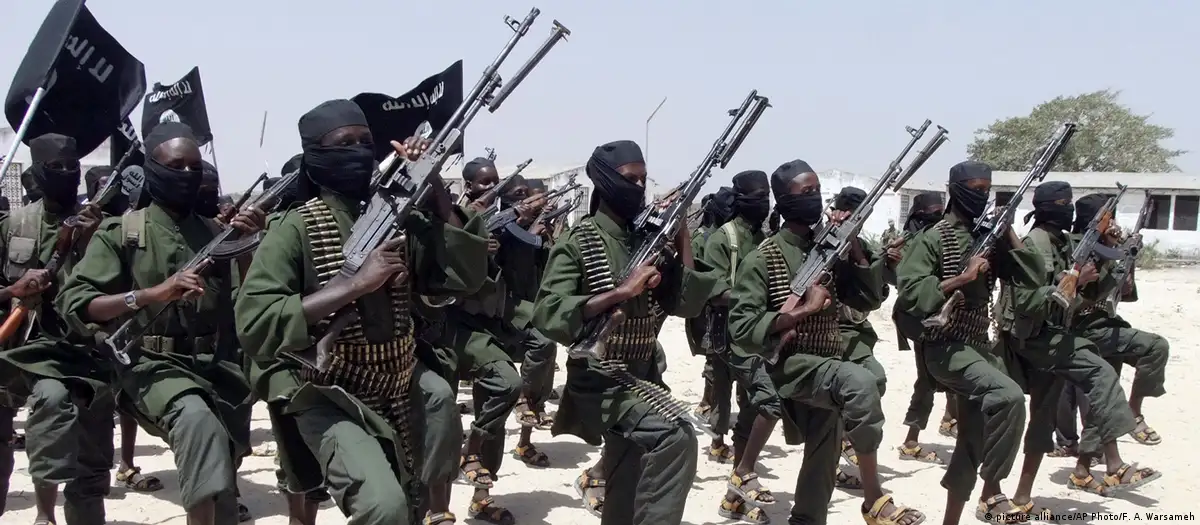
In East Africa and the Horn of Africa Al-Shabaab, Al-Qaeda-linked al-Shabaab remains the dominant and most lethal force in Somalia, continuing to threaten neighboring countries like Kenya. Militants exploit porous borders and political instability in Somalia to launch attacks and recruit fighters across East Africa.
The term ‘terrorism’ is problematic. On many occasions it is the right description for obscene acts of violence perpetrated against civilians, such as the June 2021 attack in Burkina Faso. But it is also true that, throughout the 20th century, weak, corrupt, and colonial regimes branded opponents ‘terrorists’ as a way to delegitimize their objectives.
In Africa especially, colonial powers labelled independence movements as terrorists to retain power, demonize their adversaries, and justify the use of extreme retaliatory measures. This was true of the French authorities in Algeria, the British in Kenya, the Rhodesian government and the South African Apartheid regime. Terrorism in Africa encompasses of weak governance, poverty and Marginalization, porous borders, Illicit Economies, Environmental Stress and local conflicts. Majorly West and East Africa are the regions that remain under the hot waves of terrorism. Major groups like Al-Shabaab in East Africa and various al-Qaeda affiliates in several African countries exploit these vulnerabilities to gain power. Currently, perceptions of terrorism in Africa has shifted and focused on Islamic jihadism.
Ad
Why is terrorism in Africa?
There are no easy, universal reasons for the roots of terror in Africa. The causes of violence and insurgency in African nations vary a great deal. The continent is vast with tremendous cultural and language differences at work, and the only truly shared experience is a history of European colonialism.
However, in the Sahel region some similar factors are in play. Countries such as Mali, Niger and Burkina Faso have suffered from successive weak governments characterized by corruption, impunity, and disorganization. Their elites have failed to provide security for vast sections of the population.
Military forces in the Sahel are often made up of poorly trained, under-equipped soldiers. Corruption has led to unpaid troops mutinying or deserting, as happened in Nigeria.
Worse than corrupt, militaries in the Sahel are often viewed by marginalized groups as oppressors. Soldiers are often non-professional, rarely fighting against other states, and instead used largely to protect the ruling incumbent.
Terrorism in Eastern, West and Central Africa
Parts of Africa Dominated by Terror Groups
Sub-Saharan Africa accounts for over half of all global terrorism deaths, with the central Sahel and East Africa serving as the primary epicenters. Burkina Faso, Mali, and Niger. These nations rank among the world’s most impacted by terrorism, driven by al-Qaeda and Islamic State affiliates. In Nigeria, Boko Haram and Islamic State West Africa Province continue to perpetrate mass-fatality attacks, infrastructure destruction, and village raids in the country's northeast. In Somalia, Al-Shabaab remains a potent force, conducting persistent asymmetric and high-profile truck bombings in Mogadishu alongside regional attacks, while Islamic State-Somalia operates strong logistical hubs in the north while in Kenya Continues to face cross-border security threats and periodic complex attacks linked to regional extremists-Al shabaab.
In The borderlands where Burkina Faso, Mali, and Niger meet represent the deadliest zone globally for terrorism-related deaths. Burkina Faso: Currently one of the countries hardest hit by the crisis globally, with large portions of territory outside direct state control. The Lake Chad Basin: Spanning parts of Nigeria, Niger, Chad, and Cameroon, driven heavily by factions of Boko Haram and the Islamic State – West Africa Province (ISWAP). Coastal West Africa: Militant groups are increasingly pressing southward toward northern coastal states like Togo, Benin, and Ghana.
The Epicenter of terrorism in West Africa is the central Sahel—specifically Burkina Faso, Mali, and Niger—suffers from the highest concentration of terrorist violence and deaths globally. Perhaps the most notorious terrorist activity in West Africa during the 21st century has been in Nigeria due to the activities of terrorist group Boko Haram. The Al-Qaeda-affiliated Group to Support Islam and Muslims (JNIM) and the Islamic State (IS) drive most of the violence. In Southern, The Spread Militants are pushing past the Sahel into coastal West African nations along the Gulf of Guinea, including Benin, Togo, and Ghana while in Central Africa and the Lake Chad Basin Boko Haram and ISWAP. The Violence originally centered in northeastern Nigeria has expanded across the entire Lake Chad Basin, impacting Cameroon and Chad. Splinter Factions: Boko Haram split into competing groups, including the Islamic State West Africa Province (ISWAP), making regional containment difficult. In East Africa and the Horn of Africa Al-Shabaab, Al-Qaeda-linked al-Shabaab remains the dominant and most lethal force in Somalia, continuing to threaten neighboring countries like Kenya. Militants exploit porous borders and political instability in Somalia to launch attacks and recruit fighters across East Africa. Fatalities linked to extremist groups in the Horn of Africa remain high despite ongoing regional and international military operations.
The Impact of Terrorism in Africa
Terrorism deeply impacts Africa by causing massive loss of life, displacing millions of people, destroying local economies, and destabilizing governments. Sub-Saharan Africa accounts for a major share of global terrorism deaths, with regions like some Parts of Kenya, Somalia, and the Lake Chad Basin bearing the heaviest toll.
Human and Social Toll Loss of Life and Injury
Thousands of civilians and security personnel are killed or wounded each year by militant groups like Jama'at Nusrat al-Islam wal-Muslimin (JNIM), Boko Haram, and al-Shabaab.
Mass Displacement
Millions of Africans have fled their homes due to ongoing violence, creating severe humanitarian crises in Burkina Faso, Mali, Niger, Nigeria, and Somalia.
Disruption of Essential Services
Schools, hospitals, and local infrastructure are frequently destroyed or forced to close, leaving communities without basic health and educational access.
Economic and Livelihood Impacts Destruction of Agriculture and Trade
Farming and local markets are disrupted, leading to acute food insecurity and severe poverty in rural areas.
Stifled Tourism and Investment
Security fears discourage foreign investment and devastate local tourism industries in affected nations like Kenya and others on the continent.
Diversion of Public Funds
Governments are forced to redirect scarce national budgets away from development, healthcare, and education toward military defense and counter-terrorism operations.
Political and Regional Stability Weakened Governance
Insurgencies exploit fragile political structures and local grievances, worsening corruption and eroding public trust in state institutions.
Spillover Effects
Violence frequently crosses borders, threatening previously stable coastal and regional states and prompting wider international sec
Can African nations come together to stop terrorism spreading?
While the terror threat varies from country to country, the activism of these groups shows that no African nation is immune. This shows essence of co-operation and co-ordination between various nations and regional bodies to counter terrorism.
In every region, there’s need for evaluating the threat in terrorism, violent extremists’ sources of logistics and operational supplies, funding, and recruitment extend far beyond the sites of attacks.
Several inter-dependent dynamics have led to terrorism expanding beyond the borders that include these terror groups bypassing military and security operations, expanding their areas of operation and their sources of human, operational and financial resources, and finding new hiding places.
Controlling and securing these cross-borders, aerial surveillance and access for insurgents can make these areas secure. Closing Porous borders and cooperation between Alliances in countries such as Mali, Burkina Faso and Niger on the one hand, and Economic Community of West African States (ECOWAS) members on the other, can destabilize terror groups and hider their missions.
In many instances many countries have sat and put various strategies to counter terrorism announced however, there is currently no intention well defined strategies to accomplish the mission and the main question remains whether African nations can unite and fight this menace of terrorism.
Multiagency Coordination and Investigative Capacity
Coordination between FIUs, law enforcement agencies, intelligence actors, prosecutors, and even private sector stakeholders across East Africa is improving. Kenya, for instance, has institutionalized interagency guidelines for cooperation and collaboration in the investigation and prosecution of terrorism financing. These guidelines link the Anti-Terrorism Police Unit (ATPU) with the Financial Reporting Centre (Kenya’s FIU), and the Office of the Director of Public Prosecutions (ODPP). Kenya’s Financial Reporting Centre also leverages its partnerships with the Directorate of Criminal Investigations and the Asset Recovery Agency to deploy multiagency financial crime units to the country’s borders to combat money laundering.
Regional collaboration, Cooperation, Opportunities and Fragmentation
Regional collaboration is also needed in response to the groups that are active in North-West Nigeria, Burkina Faso, Niger, Kenya, and Somalia. Initially a self-defense group, it was designated this year by Nigeria as a terrorist organization. Collaboration is key to preventing the tri-border area between Benin, Niger and Nigeria from becoming another terror epicenter in West Africa.
Affected states should learn from the experiences of other African countries – like Algeria, Mauritania, Nigeria and Niger – which have established disarmament, demobilization and reintegration programs. Despite their limitations, these initiatives have weakened terror groups by encouraging members to leave.
In addition to investing in responses that involve security and non-security measures, actions must be taken to weaken extremist groups by attacking their supply, funding and recruitment chains.
African countries collaborate to fight terrorism through regional frameworks, intelligence sharing, and joint military operations coordinated via the African Union (AU) and sub-regional bodies.
Key Collaborative Strategies Information Sharing
States work to exchange actionable intelligence on cross-border movements, financing, and recruitment by extremist groups. Joint Operations: Neighboring nations form joint task forces to secure porous borders and deny safe havens to militant networks. Capacity Building: Nations share best practices in legislative reform, law enforcement training, and judicial responses through South-South cooperation. Addressing Root Causes: Collaborative programs increasingly focus on reducing economic marginalization, supporting youth inclusion, and countering radicalization
The Growing Complexity and Evolution of Terrorism Financing
Al Shabaab’s revenue comes primarily from extortion and racketeering activities in the form of duties, fees, and “taxes” that span almost all sectors of Somalia’s economy. This includes levies at ports of entry, on roadways, and across the trade of goods and services, with Mogadishu and southern Somalia remaining the group’s largest tax base. Within the booming urban real estate sector, al Shabaab not only taxes nearly all private property transactions but also generates revenue by investing in real estate through intermediaries and proxies. The group also enforces a mandatory 2.5 percent wealth tax (zakat) in areas it controls under the guise of religious obligation.
Expanding Regional Capabilities to Counter Terrorism Financing
Given the increasingly transnational nature of al Shabaab and IS-S’s financial networks, effective counterterrorism efforts will depend on enhanced regional cooperation to identify, disrupt, and dismantle terrorist financing networks. Countries worldwide are responsible for establishing a financial intelligence unit (FIU) for receiving, analyzing, and disseminating financial intelligence consistent with the Financial Action Task Force (FATF), the international standard-setting body for the AML/CFT framework. All East African governments have made meaningful strides in operationalizing FIUs and integrating them into broader counterterrorism and AML efforts following FATF Recommendation 29 and Article 14 of the United Nations Convention against Corruption (UNCAC).
Leveraging Open-Source Intelligence and Artificial Intelligence for Financial Intelligence
As groups such as al Shabaab and IS-S increasingly adopt digital mechanisms to raise, conceal, and move funds, financial intelligence and investigative teams are beginning to incorporate open-source intelligence (OSINT), block chain analytics, machine learning, and artificial intelligence (AI) into financial intelligence (FININT) and counterterrorism financing investigations. The growing use of digital platforms and financial services generates extensive digital trails, while the broader digital ecosystem exploited by terrorist groups for recruitment, propaganda, operations, and communications produces large volumes of publicly available information. By systematically collecting and analyzing these data, OSINT enables analysts and investigators across FIUs, law enforcement agencies, and intelligence services to identify, corroborate, and contextualize suspicious financial activity.
Underutilized Military Intelligence
Military intelligence has played a decisive role in identifying and disrupting terrorism financing networks, particularly in conflict-affected regions. This is evidenced by the July 2025 capture of Abdiweli Mohamed Aw-Yusuf (Walalac), head of IS-S’s Finance Department.
Military forces operating in conflict zones and border areas, however, often lack the training protocols for evidence collection, chain of custody, and interagency transfer. This results in gaps in identifying individuals involved in terrorism financing, as well as preserving and transferring evidence to the relevant civilian authorities for terrorism financing investigations, asset forfeitures, and ultimately successful terrorism prosecutions.
Prosecution-Led Investigations
Unlike traditional law-enforcement-led approaches that typically involve prosecutors later in the investigative process, prosecution-led investigations engage prosecutors from the outset. Doing so ensures proper collection, preservation, documentation, and transfer of evidence to meet admissibility standards in court. The successful prosecution of the individuals involved in the 2019 DusitD2 attack in Nairobi, Kenya, illustrates the effectiveness of prosecution-led investigations.
Please complete the verification below to continue.
Please complete the verification
Human verification passed
Edit Comment
Delete Comment
Are you sure you want to delete this comment?
This action cannot be undone.
Loading comment content...
We value your privacy
We use cookies to enhance your browsing experience, serve personalized content, and analyze our traffic. By clicking "Accept All", you consent to our use of cookies. You can manage your preferences at any time. Learn more.
Cookie Settings
We use cookies to improve your experience on our site. You can choose which cookies to allow. Read our full Cookie Policy.
Essential CookiesRequired
These cookies are necessary for the website to function properly and cannot be switched off.
Analytics & Performance
These cookies help us understand how visitors interact with our website by collecting anonymous information.
Functional Cookies
These cookies enable enhanced functionality and personalization, such as remembering your preferences.
Targeting & Advertising
These cookies may be used by advertising partners to build a profile of your interests and show you relevant ads.














Comments (0)
No comments yet. Be the first to share your thoughts!